


Norwegian Cruise Line’s Sustainability Values
Our global sustainability program, Sail & Sustain, is centered around our commitment to drive a positive impact on society and the environment while delivering on our vision to vacation better and experience more. We visit nearly 500 destinations globally, allowing our guests to travel and explore the world, and our business is inextricably linked to the preservation of our planet and the protection of our shared resources.
Our environmental, social and governance (ESG) strategy is focused on five pillars and was developed through cross-functional collaboration with key internal and external stakeholders. As we continue our ESG journey, we look forward to building upon this foundation and meaningfully contributing to the UN Sustainable Development Goals (SDGs) as we collectively chart a path towards a more sustainable future.





Reducing Our Environmental Impact
Reducing our environmental impact is an essential part of our Company’s mission and culture. We are committed to addressing climate change and doing our part to protect and preserve our oceans and the environment.
* GHG intensity is measured by MTCO2e on a per Capacity Day basis. The targets cover NCLH’s emissions from its fleet of ships, islands and facilities (Scopes 1 & 2) as well as upstream fuel- and energy-related activities, including well-to-tank emissions (portion of Scope 3). “Capacity Days” is defined as Berths available for sale, multiplied by the number of cruise days for the period for ships in service.
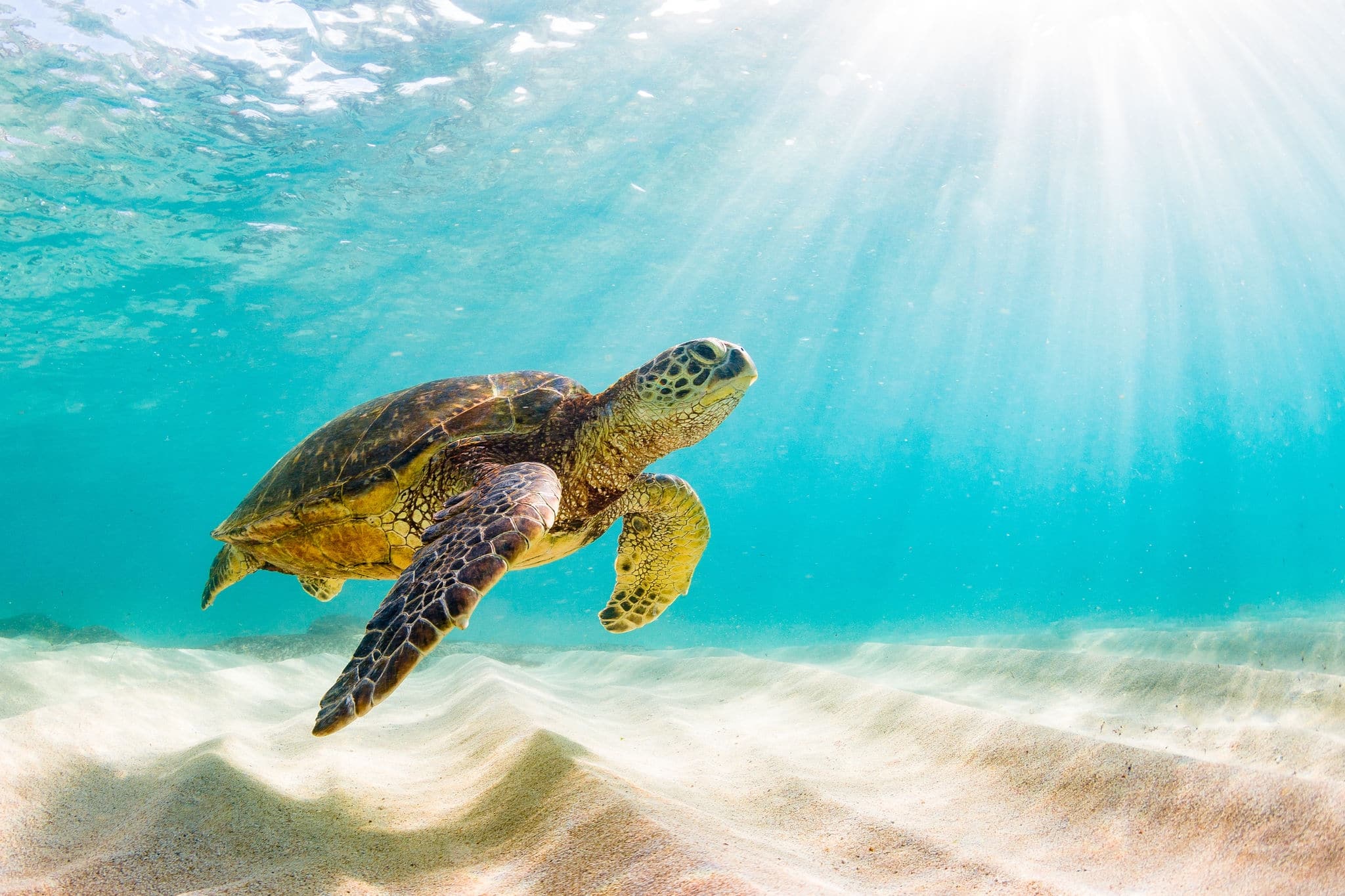

Norwegian Prima Class Sustainability Features
We continuously seek and invest in new technologies and innovations that will allow us to improve our environmental performance, both for our existing fleet and the new ships we have on order.
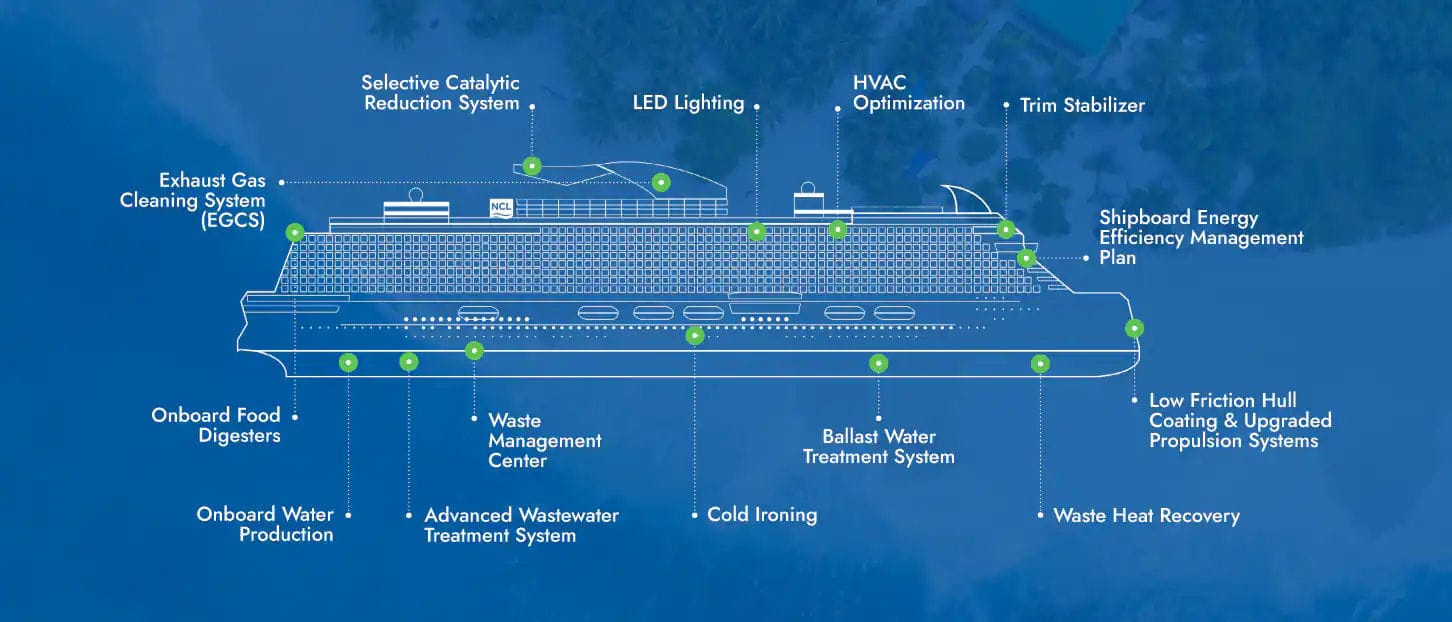
Selective Catalytic Reduction System
Reduces up to 90% of nitrogen oxides (NOx) emissions by transforming it into harmless water and nitrogen.
Exhaust Gas Cleaning System (EGCS)
Reduces up to 98% of sulfur oxides (SOx) emissions.
LED Lighting
Energy-efficient LED and fluorescent lights to optimize power consumption onboard.
HVAC Optimization
Upgraded heating, ventilation and air conditioning systems.
Trim Stabilizer
A software application that assists in optimizing the trim of the ship by monitoring stability levels.
Shipboard Energy Efficiency Management Plan
Ship-specific plan focused on smart itinerary and voyage planning, speed optimization and more to reduce energy utilization.
Low Friction Hull Coating & Upgraded Propulsion Systems
Low friction coating is used on our ship hulls and we have upgraded propulsion systems to reduce drag and increase efficiency.
Waste Heat Recovery
Recovers heat from engines and transfers it to freshwater piping, creating a free source of energy to improve water production and save fuel.
Ballast Water Treatment System
Utilized to ensure no invasive species are inadvertently introduced into new waters.
Cold Ironing, also known as Shore Power
All newbuilds on order will be equipped to connect to onshore power grids, further reducing our emissions while in port.
Waste Management Center
Waste is safely compacted, separated or incinerated, and residual waste is collected and safely offloaded from the ships for either recycling or disposal.
Advanced Wastewater Treatment System
Treats and cleans all wastewater to meet stringent international standards.
Onboard Water Production
Evaporators and reverse osmosis plants that use seawater as the source, reducing the need for the bunkering of fresh water.
Onboard Food Digesters
Food digesters use air, water and microbiology to safely turn food waste into liquid, reducing overall food waste.