Added to Favourites!
Saigon Highlights
Ho Chi Minh City (Phu My), Vietnam
Duration 9 hrs
- Adult from: $89.00 USD
- Child from: $69.00 USD

| From | Message | Reservation # | Date | |
|---|---|---|---|---|
| Norwegian Communications Centre | Norwegian Communications Centre Don’t Lose Your Reservation! | 25422881 | Apr 1, 2014 | |
| Norwegian Communications Centre | Norwegian Communications Centre Reserve your dining now | 25422881 | Apr 1, 2014 | |
| Norwegian Communications Centre | Norwegian Communications Centre Don’t Lose Your Reservation! | 25422881 | Apr 1, 2014 | |
| Norwegian Communications Centre | Norwegian Communications Centre Don’t Lose Your Reservation! | 25422881 | Apr 1, 2014 |
*Terms & Conditions
Package not available on sailings less than 5 days or charter sailings.
Duration 9 hrs
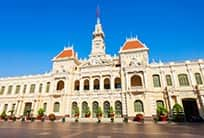
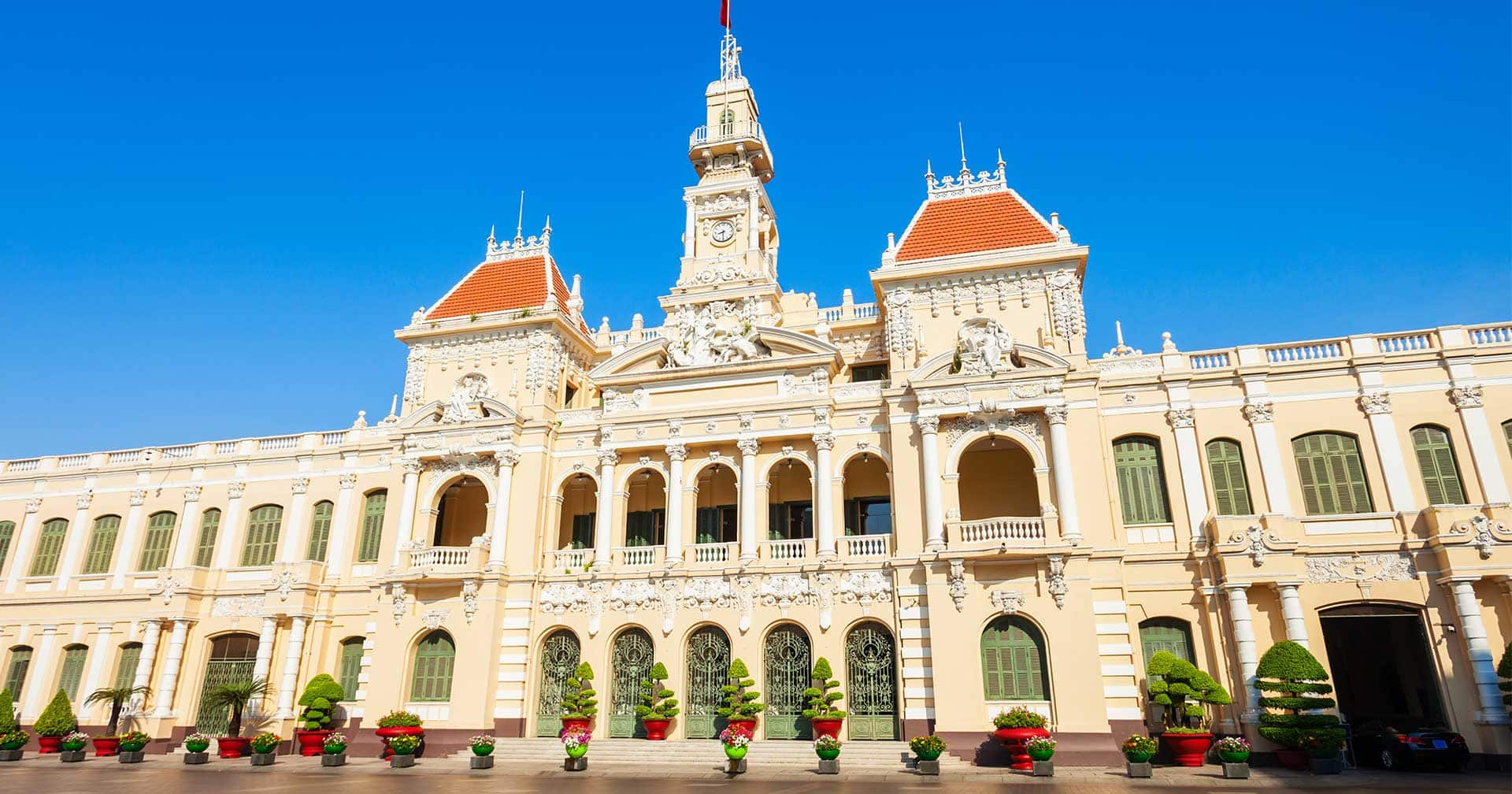
Gain an overall understanding of Saigon through landmark architecture that reflects the changing face of the metropolis known as Ho Chi Minh City since 1976. In the lively district of Cholon, you will browse the bustling Binh Tay Market and a Buddhist temple dedicated to the Chinese sea goddess Mazu. For a more contemporary perspective, you will view Independence Palace, also known as the Reunification Palace, a modernistic white building that was home to the president of South Vietnam during the Vietnam War. The Notre-Dame Cathedral Basilica of Saigon presents a glimpse into colonial life, as the French constructed it in the mid-1800s. The ornate Central Post Office is another French-built colonial gem. If not for the large portrait of Ho Chi Minh inside, you might think you were in Paris. Saigon is also known for its artisans, especially those that make lacquerware, a traditional skill that you will observe in a workshop.
less
Duration 7 1/2 hrs
OVERVIEW
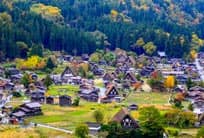
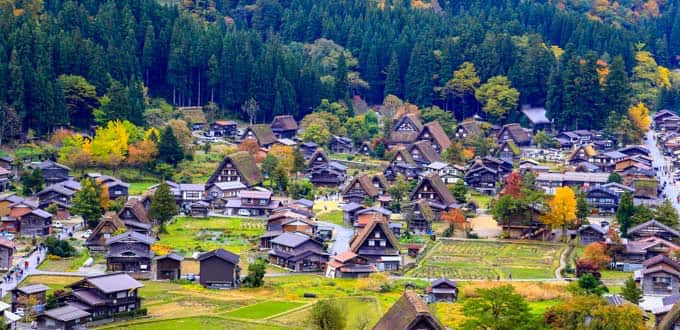
Behold the architecture in two isolated villages that UNESCO found so unusual that it deemed them World Heritage sites. The villages of Shirakawago and Gokayama are in the remote Shogawa River Valley surrounded by high rugged mountains, a location that made them difficult to access for centuries. To cope with the abundance of snow that falls there, the residents constructed farmhouses with steeply pitched thatched roofs to reduce the amount of snow that accumulates on them. The roof design also allows for large attics, in which the residents rear silkworms, which they feed leaves from the surrounding mulberry trees. Only one other nearby village boasts this type of architecture known as gassho-zukuri, a style that means “constructed like hands in prayer.” Following free time in both villages, you will watch a demonstration of paper-making in Gokayama. The specialized washi paper is exceptionally colorful and patterned. The fiber for it comes from mulberry trees.
HIGHLIGHTS
• Visit two villages that UNESCO declared World Heritage sites for their architecture.
• Gain an understanding of why the buildings have such steep roofs.
• Explore the areas of most interest to you during free time in both villages.
• See how durable washi paper used for arts, crafts and writing is made from mulberry bark.
HELPFUL HINTS
• Dress in weather-appropriate clothing.
• Wear flat comfortable walking shoes.
Duration 3 3/4 hrs
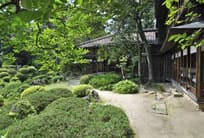
Delve into the artistic and cultural sides of Sakata by visiting three museums, each with its own special emphasis. One of the first privately owned art museums Japan, the Honma changes its exhibits every few months, but the real draws are the garden and early 19th-century villa of the prominent Honma family, where the museum was originally housed. Both are wonderfully serene. Almost the entire focus of the Domon Ken Museum is the photography of its namesake, a prolific Sakata-born photojournalist revered for the way he documented the rise of postwar Japan. Don’t miss the outdoor sculptures by Isamu Noguchi, a creative genius that also worked in media ranging from lighting to furniture. The Shonai Rice Museum is more cultural, as it is housed in several 19th-century warehouses. It collection includes farm tools and exhibits detailing the history of rice cultivation. The zelkova trees surrounding the museum have become a symbol of Sakata.
Duration 3 1/2 hrs
Sabah is the second largest state in Malaysia, located on the northern tip of Borneo Island and one of Southeast Asia's greatest surprises.
This half-day tour will introduce you to Kota Kinabalu, Sabah's modern state capital with its alluring blend of Malay and Chinese culture. Largely destroyed during World War II, Kota Kinabalu has since developed into one of Malaysia's most exciting cities. Go past the serene City Mosque, followed by a photo stop at the Tun Mustapha Building. A 30-storey circular glass edifice supported by high tensile steel rods, this amazing structure is an architectural and engineering feat, one of only four such buildings in the world.
Continuing on, you will visit the Skull House - Heritage Village, located within the compound of the Sabah State Museum. Situated within the Ethno Botanical Gardens, you’ll find replicas of traditional long houses representing the different ethnic communities of Sabah. Enter the houses and discover the way of life of the different groups.
From here, it's on to the magnificent Masjid Negeri Sabah or State Mosque, with its golden inlay motifs and impressive minaret. After a photo stop here, you will then make your way to your final stop, a brief visit to a local handicraft market where you can mingle with the locals and perhaps pick up a few souvenirs to take home.
Duration 4 1/2 hrs
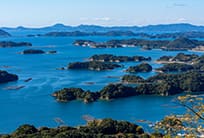
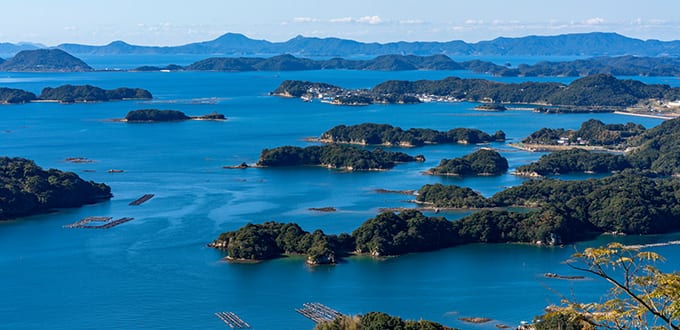
Explore the Kujukushima Islands by land and sea, an enlightening experience that will highlight their extraordinary natural beauty. As you will see, the best view of Kujukushima’s islands is from the Kujyukushima Park, which offers a 180-degree perspective of dozens of the more than 200 islands that make up the archipelago. For a closer look at the islands, you will board a boat at the Kujukushsima Pearl Sea Resort and cruise through the archipelago, which is a national park. Only four of the islands are inhabited, which has kept the area pristine and environmentally sound. The islands are so undeveloped and photogenic that they were shown in the opening scenes of the movie “The Last Samurai,” which was set in 1876.Back on land, you will stop to observe the sea from Saikai Bridge, which connects Sasebo to Nagasaki. It is a magnificent setting as more than 1,000 cherry trees surround the bridge.
Duration 4 hrs
OVERVIEW
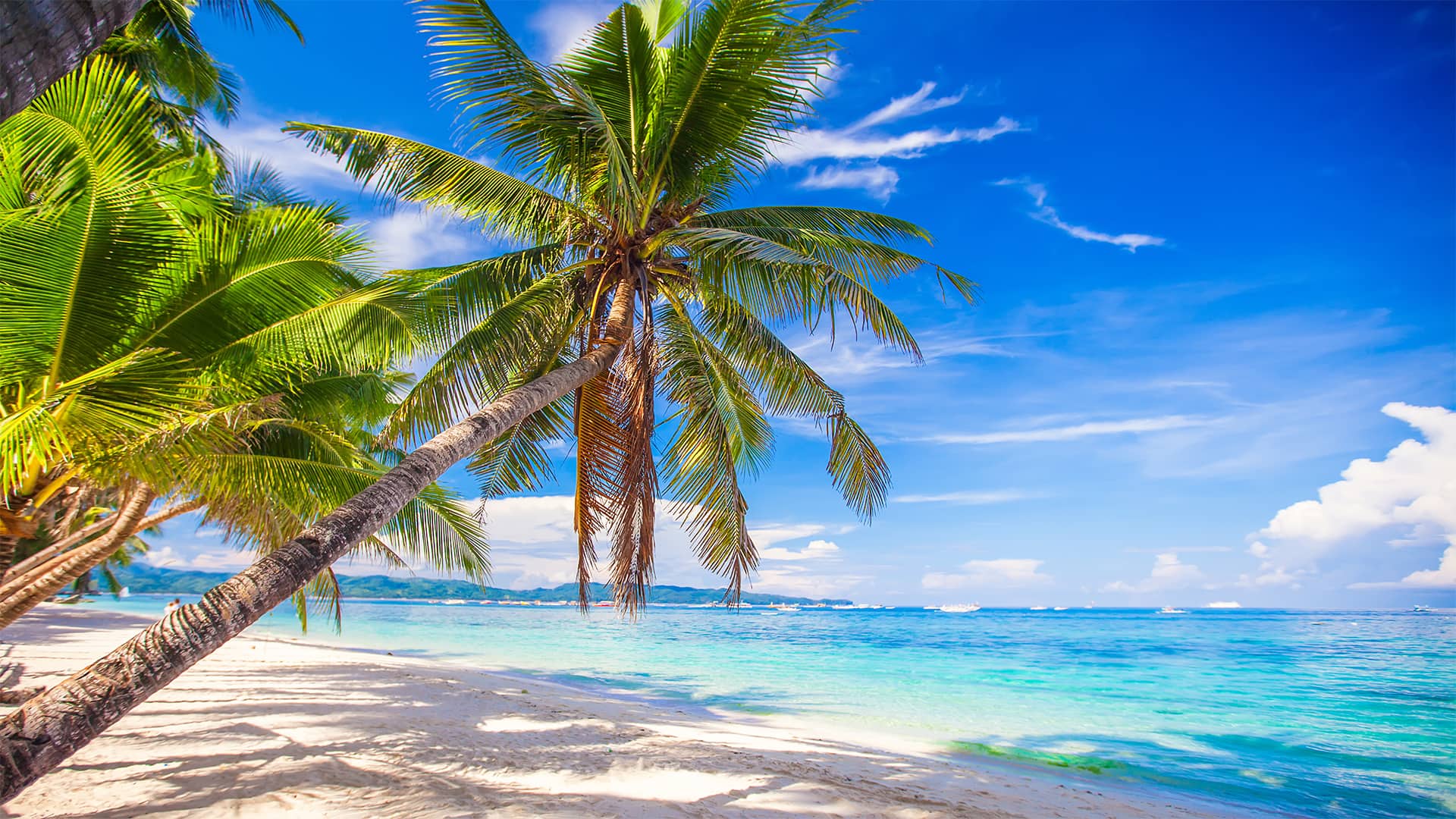
Spend a carefree day doing at White Beach, a spectacular stretch of sand around four miles long and half a mile wide island in the Southern Philippines. Instead of driving to the beach, you will cruise along the coast in a local boat that will present the tropical beauty of Boracay from a unique water perspective. As White Beach comes into view, you will instantly understand its popularity. The contrast of the brilliant blue sea gently lapping the sugar-white sand with stands of coconut palms in the background is truly breathtaking. You will be dropped off at White Beach, leaving you free to do whatever you please with no schedule to follow other than your own. You might take a refreshing swim, stretch out on a towel in the radiant sun, stroll along the idyllic shoreline or simply relax in the shade. Other options include shopping and dining, all within easy walking distance.
HIGHLIGHTS
• Relax however you wish on White Beach on Boracay’s western shore.
• Swim in the sea, stretch out in the sun and enjoy the setting however else you please.
• Shop and dine in the nearby stores and restaurants if you please.
HELPFUL HINTS
• Dress in weather-appropriate clothing with a swimsuit underneath.
• Wear flat comfortable walking shoes.
• Bring a towel and sunscreen.
Duration 4 1/2 hrs
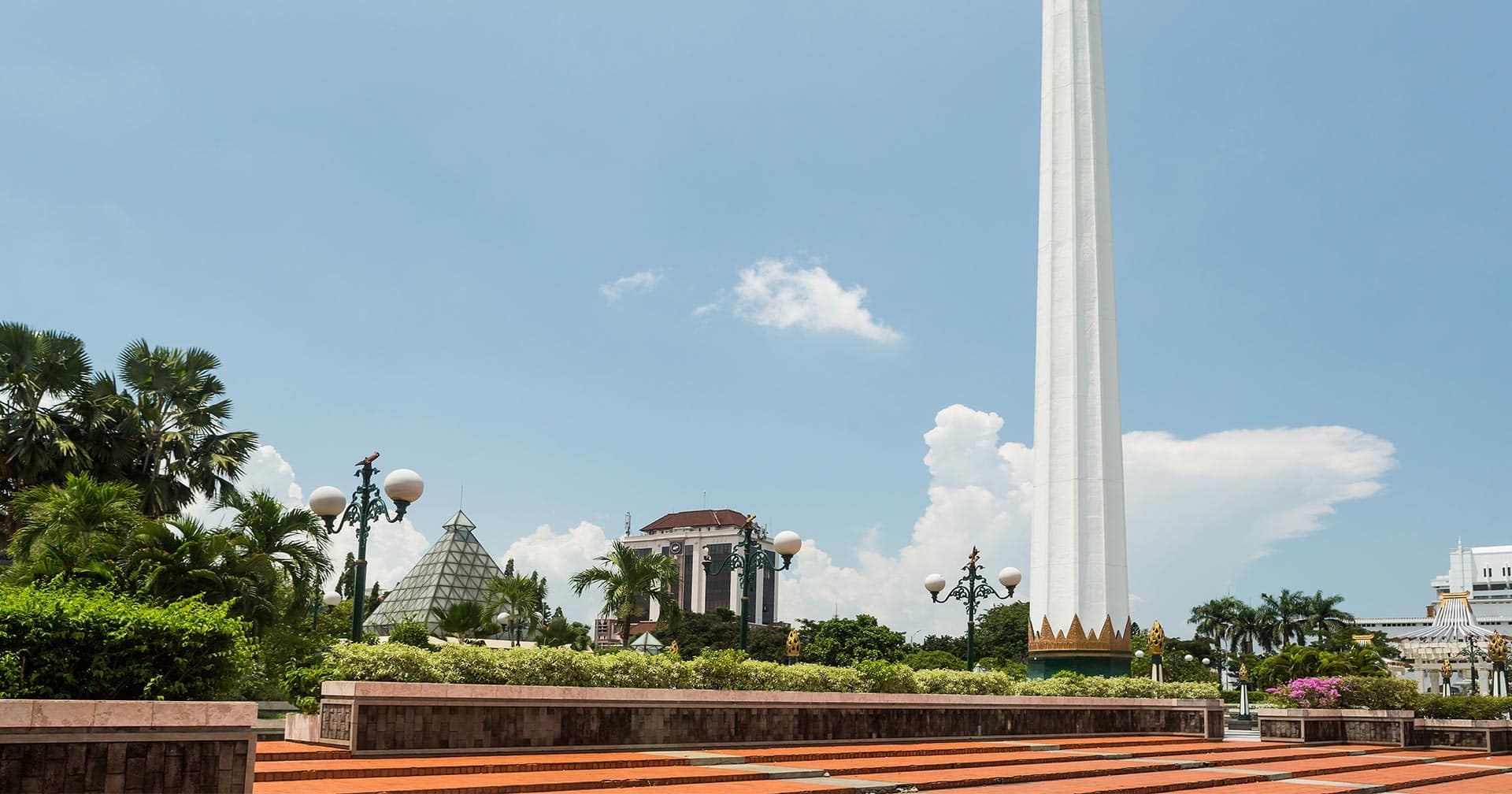
Explore the heritage aspect of Surabaya visiting the Dutch colonial style building compound and visit the iconic heroes’ monument of Surabaya City. Delve into the cultural heritage of Surabaya by visiting Kampong Lawas Maspati, commemorative war monument and a 5-star hotel that reflects more than a century of local history. A panoramic drive through the city takes you to the Majapahit Hotel, a more than 100-year-old lodging that the Japanese used as their headquarters in East Java during World War II. This classic landmark blends romance and elegance with its graceful colonial architecture. While touring, you will see how the hotel has evolved into a 5-star resort. During the visit have some local coffee and enjoy the local snacks. Continuing on, you will next visit the Heroes Monument, a towering obelisk that commemorates the Indonesian soldiers and civilians that died in the Battle of Surabaya in 1945. The conflict eventually led to Indonesian independence in 1949. Our last stop will be visiting Kampoeng Lawas Maspati, it is now a village being made as community base tourism where historical building is still maintained such as the Residence of Raden Sumomiharjo (the relatives of Sultanate Palace of Solo) and Sekolah Ongko Loro the historical people school since 1917. We will learn how in a crowded kampong with nearly no soil left, the villagers can create the green zone, also have some cultural activities specially presented by the local community and mostly elderlies.
less
Duration 4 hrs
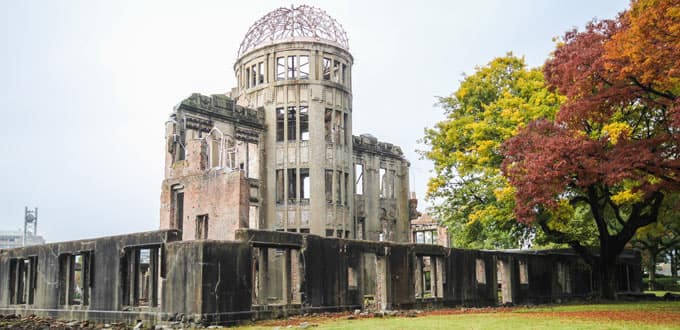
View the landmarks of Hiroshima, some commemorating the atomic bomb blast here in 1945 and others reflecting the city’s celebration of peace. At the poignant Hiroshima Peace Memorial Park, you will behold the ruins of some of the few concrete buildings left after the atomic bomb was dropped. One of them, the Atomic Bomb Dome, has been declared a UNESCO World Heritage site and has become a symbol of Hiroshima. You will also browse the Peace Memorial Museum whose exhibits show Hiroshima before and after the bombing and personal artifacts from the victims that humanize the devastating event. The museum encourages visitors to make a vow for universal peace. While the mood there is somber, serenity is the overarching theme at Shukkei-en Garden. Besides being a wonderful respite from the hubbub of the city, the garden is a visual delight, as plants are always in bloom. Although the atomic bomb destroyed the garden, it has been fully restored.
Duration 7 hrs
OVERVIEW
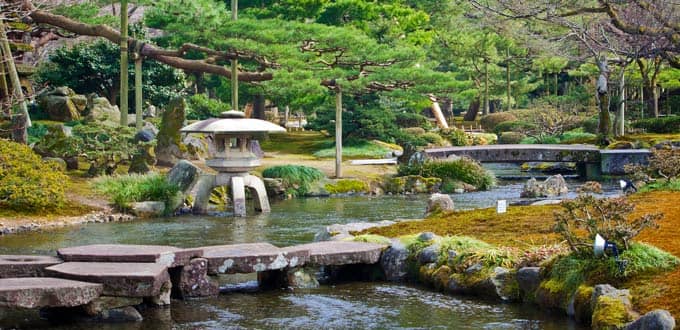
Gain a remarkably comprehensive understanding of Kanazawa through a wide diversity of attractions, beginning with the Omicho Market. Established in 1721, Omicho is the city’s largest and surely liveliest market with nearly 200 shops selling everything from seafood to flowers to confections. Best of all, many of the stores offer samples. The atmosphere will be more serene at Kenrokuen, an oasis that was once the outer gardens of Kanazawa Castle. It is a magnificent setting no matter what the season as you will discover while strolling the meticulously landscaped grounds. For a glimpse into modern Kanazawa, you will browse the 21st Century Museum of Contemporary Art, an architectural masterpiece of minimalism that is as provocative as the artwork inside. Higashi Chaya is the city’s largest district of teahouses where geishas performed songs and dances. Although some of the teahouses are still active, the majority of them have been converted into fine restaurants and coffee shops.
HIGHLIGHTS
• See Kanazawa’s most quintessential attractions, including the vibrant Omicho Market.
• Stroll through the serene gardens that surround historical Kanazawa Castle.
• Browse a museum of contemporary art for a glimpse into modern Kanazawa.
• Explore a district full of teahouses where geishas performed songs and dances.
HELPFUL HINTS
• Dress in weather-appropriate clothing.
• Wear flat comfortable walking shoes.
Duration 4 hrs
Gain a greater understanding of life in Hakodate by visiting a thriving marketplace, riding the tram to the city’s highest point, and strolling through a historic neighborhood. Travel through the picturesque streets of Hakodate, one of the first ports that opened to foreign trade following Japan’s period of self-isolation. Stop at the Morning Market, which spans nearly four city blocks. The marketplace is a wonderful place to observe daily life, as the locals bustle among hundreds of stalls, most featuring fresh seafood. You can expect to see familiar items such as squid, salmon roe and Atka mackerel, as well as more unusual ingredients like jellyfish, fermented carp and barnacles. Locals also come here for fruit, spices and domburi rice bowls. Board an aerial tram that will carry you nearly a half mile to the summit of forested Mount Hakodate, an extinct volcano. The views along the way and from the top of the mountain, weather permitting, will be spectacular. As you approach, be sure to notice the mountain’s shape, which resembles a “cow lying down,” the mountain’s odd nickname. You will also have the opportunity to stroll the streets of Motomachi, a district at the foot of the mountains where most foreigners lived after Hakodate was opened to the west in 1854. Architectural highlights include a Russian Orthodox church and the former British consulate
Duration 3 1/2 hrs
OVERVIEW
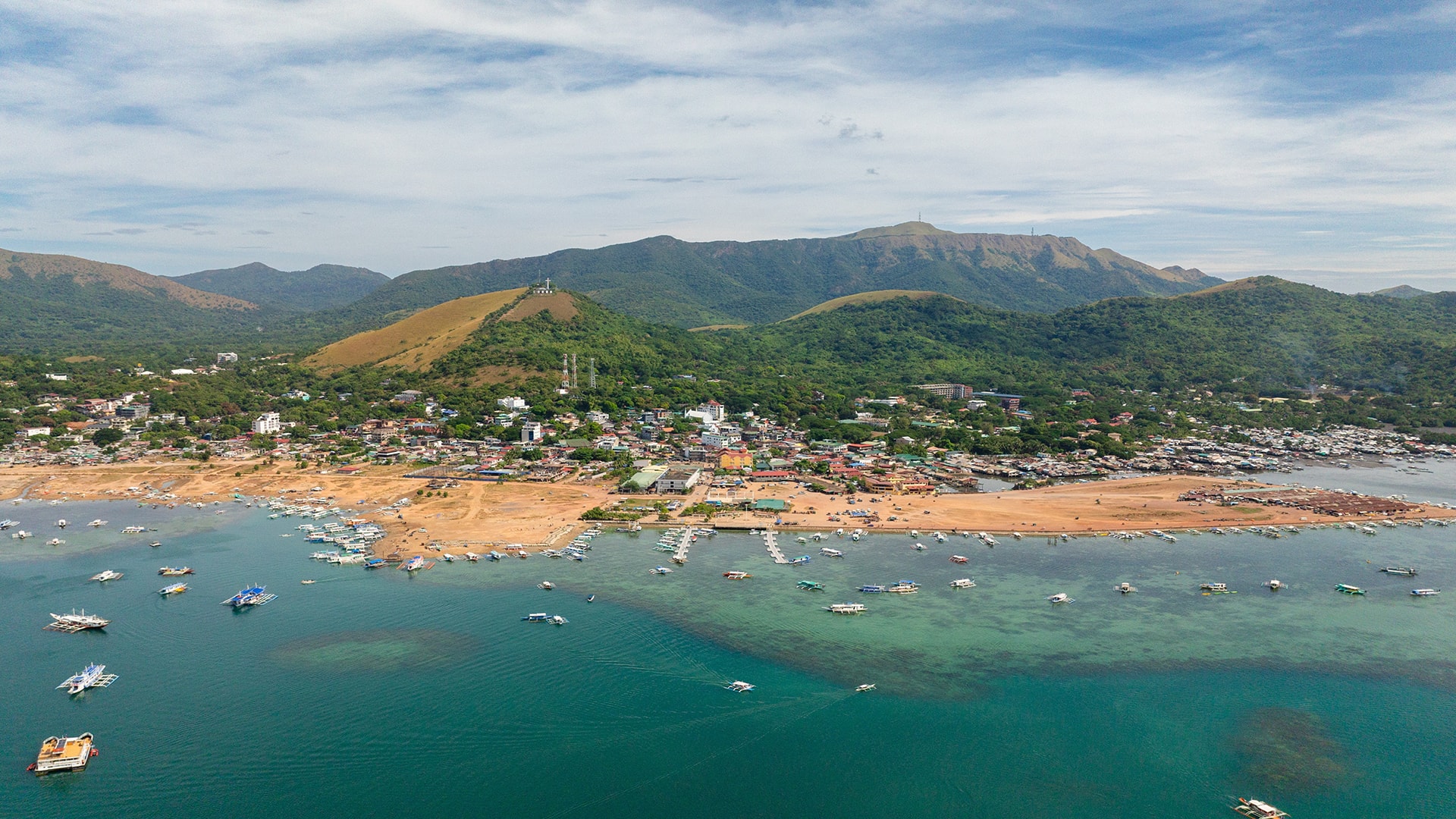
Explore the main attractions in and around Coron beginning with an enlightening drive through the heart of downtown. There, you will see Coron’s only Catholic church, waterfront Lualhati Park and the Wet Market, where you will observe a genuine slice of daily life as the residents go about their shopping. A stop at a family-owned cashew store will reveal how these prized nuts are processed. In essence, once the acidic shells are removed, the cashews are toasted, sun-dried, sugar-coated or flavored with garlic powder. Maquinit Hot Spring, the only saltwater hot spring in the Philippines, lies just outside the city limits. You will have the chance to ease into the therapeutic spring and enjoy its soothing mineral-rich water. The mangrove forest that serves as a scenic backdrop will make the experience all the more delightful. Later, while visiting a fishing village, you might strike up a conversation with the residents and learn about their livelihoods.
HIGHLIGHTS
• View Coron’s landmark attractions on a panoramic drive through the downtown.
• See how cashews are processed and flavored at a family-owned store.
• Ease into a mineral-rich saltwater hot spring and enjoy its therapeutic benefits.
• Interact with the residents of a fishing village on the outskirts of Coron.
HELPFUL HINTS
• Dress in weather-appropriate clothing with a swimsuit underneath.
• Bring sunscreen and a towel and wear comfortable walking shoes.
Duration 4 1/2 hrs
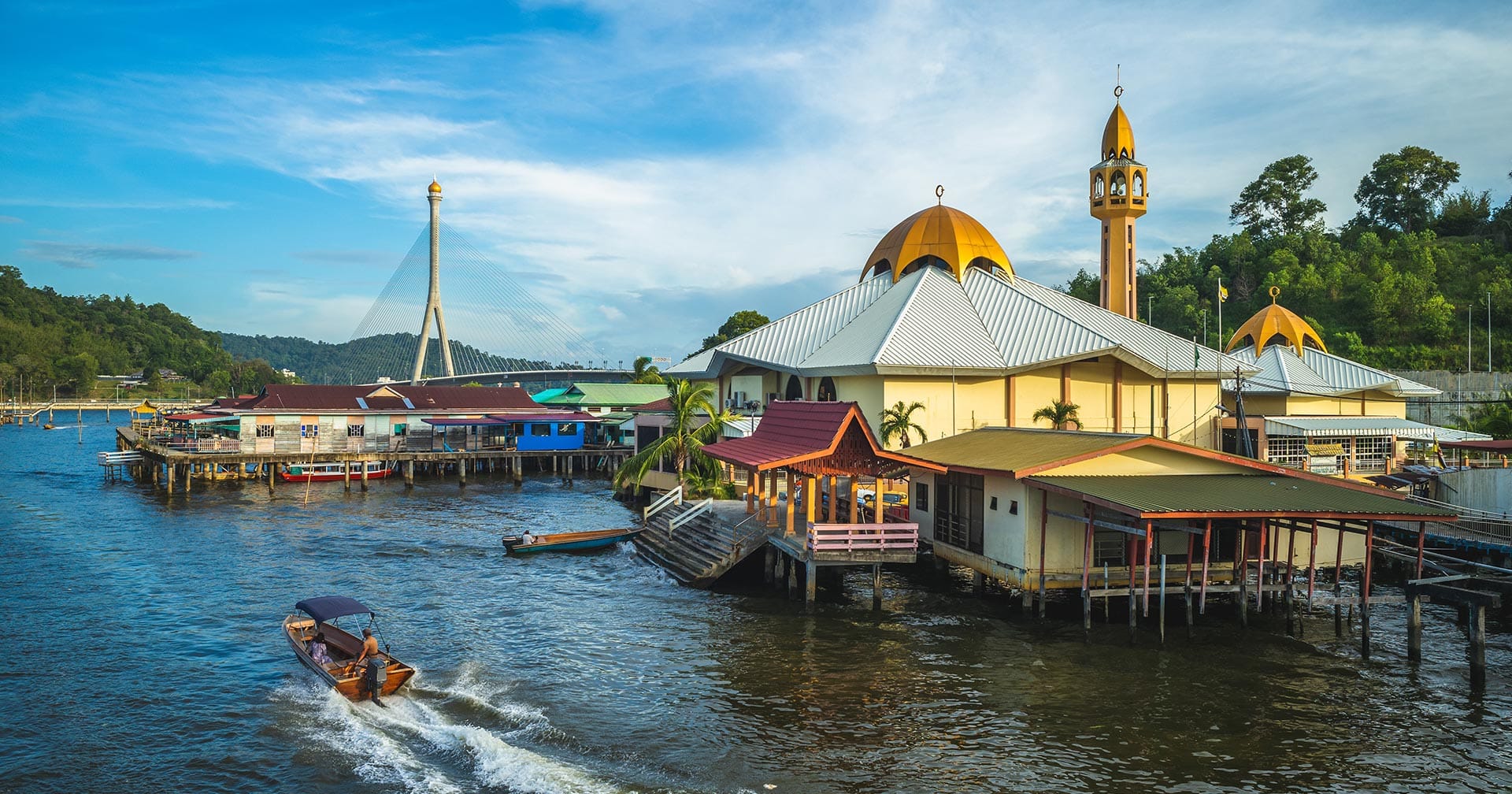
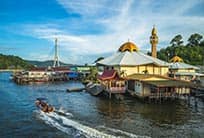
An eye-opening study in contrasts, this tour presents the extravagant world of Brunei's sultan, followed by a look at life in a village built on stilts in the river. Starting off from the pier, you will first travel inland toward the majestic Jame Mosque, Brunei's largest, and the Prime Minister Office where you will pause briefly for photos. Continuing on, you will arrive at the white-domed Royal Regalia where you can wander through exhibits of luxurious items from the Sultan's lavish coronation and other celebrations. Some of the items you may have the opportunity to see here are His Majesty's royal chariot, ceremonial swords, a model of the palace and various gifts from foreign dignitaries. But as you will soon see, there's more to Brunei than the extravagances afforded by its abundant oil and natural gas. Making your way to a nearby jetty, you will board a boat and cruise to Water Village where you will witness firsthand a much different side of life. More than 30,000 people live here in thousands of structures built on stilts in the Brunei River. The village is an amazing assortment of homes, restaurants, mosques, shops and hospitals, all connected by wooden boardwalks. Surprisingly, some of the homes are quite elaborate, and you will have the unique opportunity of stopping by one for a cup of tea. Amazingly, people have lived in the Water Village for more than 1,300 years, making it one of the most historic areas in Brunei. Following your time at the Water Village, you will retrace your route as you make your way back to the pier.
*Prices vary by ship and sail date. See Terms & Conditions
NCL makes arrangements for Guests for shore excursions solely for the convenience of the Guest; NCL does not act on behalf of or supervise the parties or persons who own, furnish, or operate such excursions, and the same are provided by independent contractors. NCL assumes no responsibility for, nor guarantees the performance of, any such excursion provider, and Guests acknowledge that NCL shall not be liable for losses or injuries arising from the acts or omissions of such provider.
Participation in activities and excursions may involve physical exertion, and may be potentially hazardous or dangerous. It is the responsibility of each individual to determine whether you are capable of engaging in any activity. Participation in any activity or excursion is at your own risk.
Photographs are for illustration purposes only used to represent the excursion experience and may not accurately depict the excursion, location, or activity indicated.
Our group shore excursions are offered in English. Depending on the booking situation, various excursions are also offered in German, Spanish, French, Italian or Russian (minimum number of 30 participants). The tours offered may vary from cruise to cruise. Please see the detailed information for your shore excursion on board.