Added to Favourites!
Traditional Kyoto
Kyoto (Osaka), Japan
Duration 8 1/2 hrs
- Adult from: £175,68 GBP
- Child from: £124,23 GBP

| From | Message | Reservation # | Date | |
|---|---|---|---|---|
| Norwegian Communications Centre | Norwegian Communications Centre Don’t Lose Your Reservation! | 25422881 | Apr 1, 2014 | |
| Norwegian Communications Centre | Norwegian Communications Centre Reserve your dining now | 25422881 | Apr 1, 2014 | |
| Norwegian Communications Centre | Norwegian Communications Centre Don’t Lose Your Reservation! | 25422881 | Apr 1, 2014 | |
| Norwegian Communications Centre | Norwegian Communications Centre Don’t Lose Your Reservation! | 25422881 | Apr 1, 2014 |
*Terms & Conditions
Package not available on sailings less than 5 days or charter sailings.
Duration 8 1/2 hrs
Discover the gracious spirit of Old Japan on this full-day tour to three of Kyoto's most alluring sites. The imperial capital of Japan for over a thousand years, Kyoto is the cultural and artistic heart of the nation, best known for its Buddhist temples, Shinto shrines, beautiful gardens and historically priceless buildings.
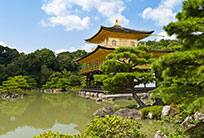
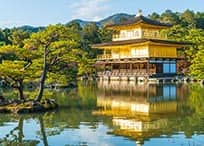
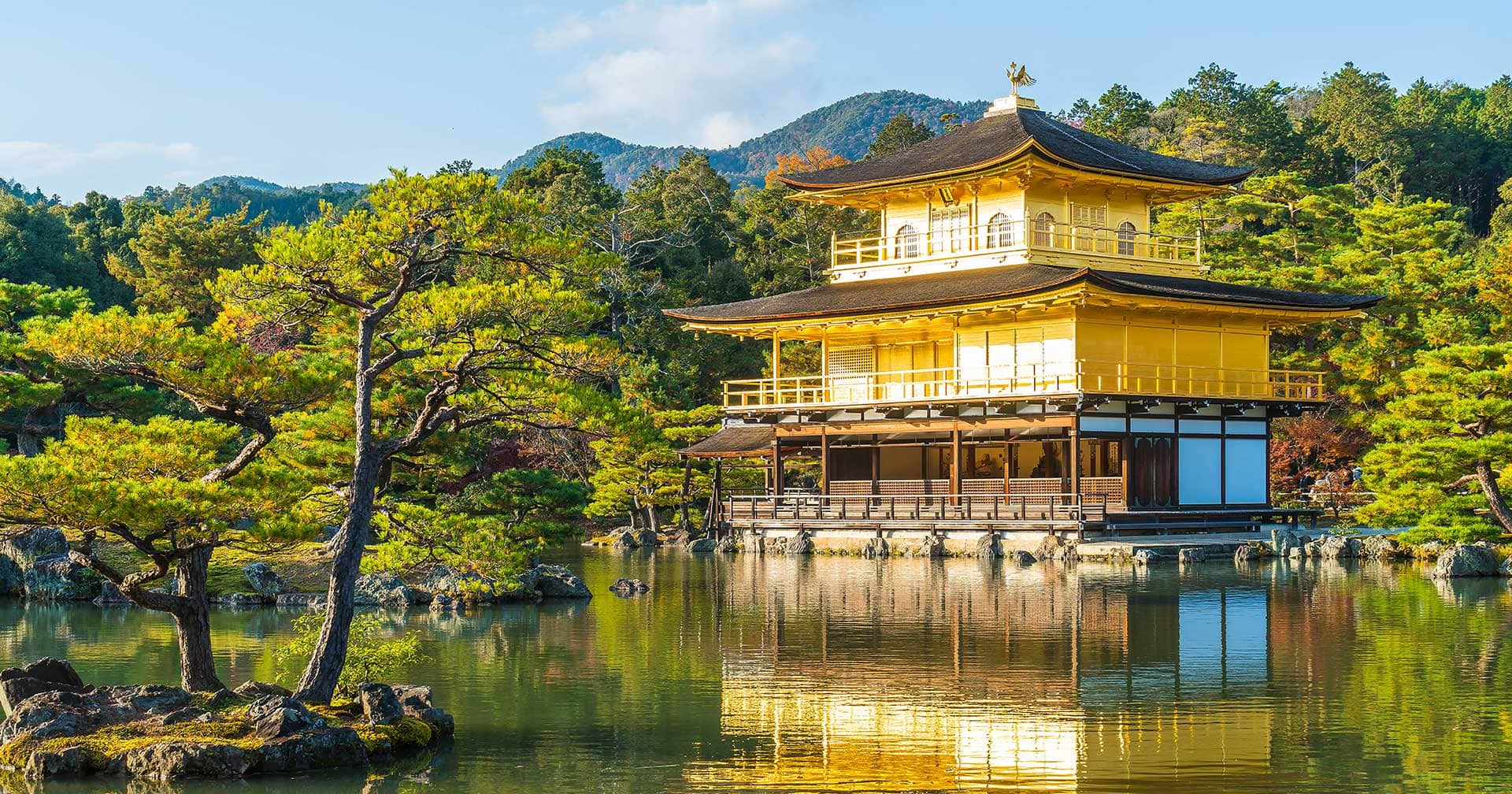
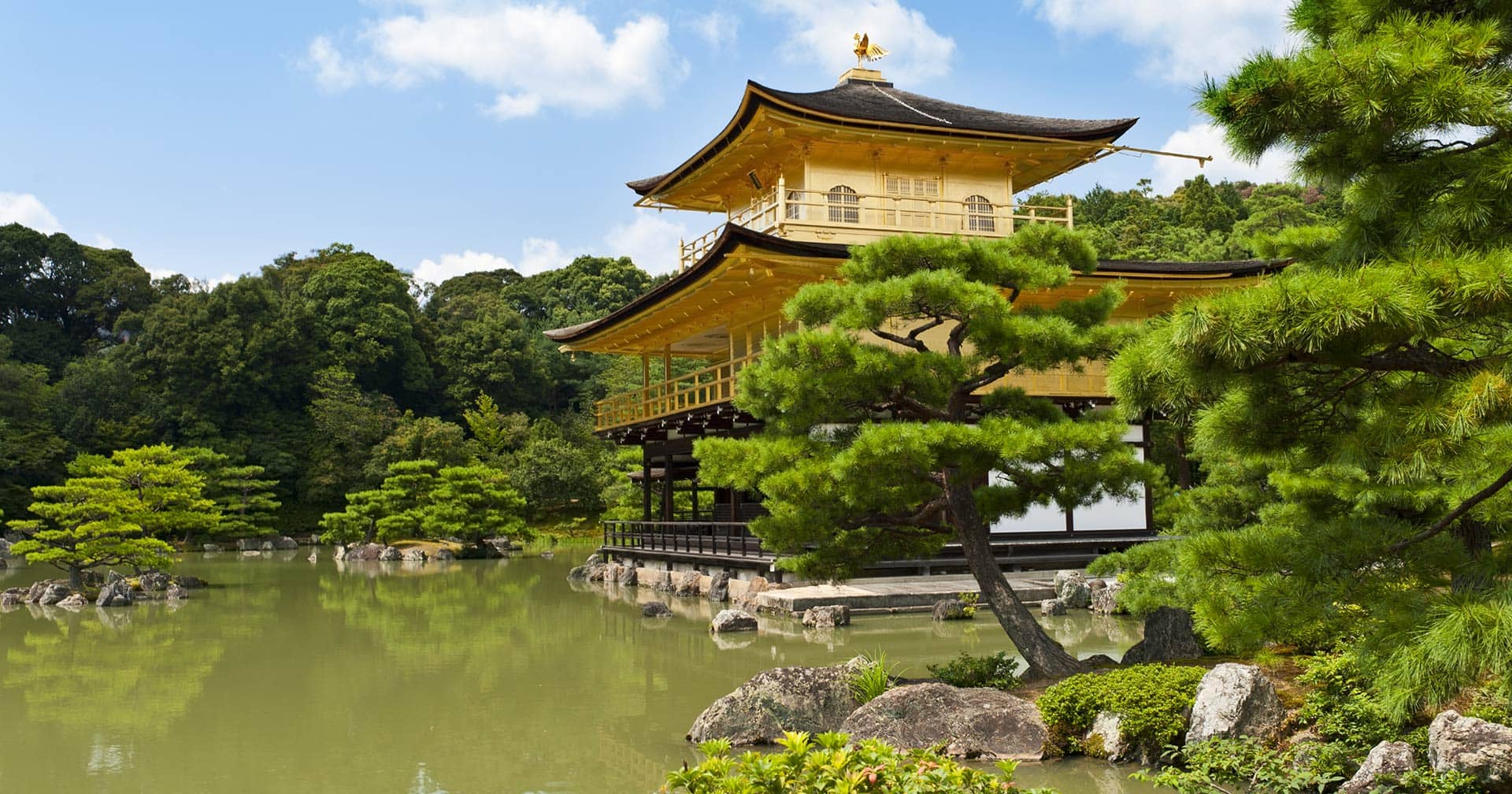
Following an approximately 90-minute scenic drive to Kyoto, you arrive at the magnificent Kinkakuji (Golden Pavilion), Kyoto's world-renowned and most photographed temple and garden. Built in 1394, the original Kinkakuji was a retirement villa for a former Shogun. The three-story Chinese-influenced Golden Pavilion has delicately curving roofs, with the walls and eaves of the second and third stories covered in shimmering gold leaf.
After lunch at a local restaurant, you'll visit Nijo Castle, with its immense walls and moat. Completed in 1603, the castle is famous for its nightingale floors, designed to detect the footsteps of ninja assassins and warn the residents of invaders. Listed as a UNESCO World Heritage Site, Nijo Castle is one of the world's great historical buildings.
Another stop in your tour is Sanjusangendo, famous for its 1,001 12th-century statues of the Buddhist deity Kannon, the Goddess of Mercy. Sanjusangendo translates to hall with 33 bays and the 33 alcoves display 1,000 awe-inspiring statues and a single gigantic sitting image of Kannon. Carved from Japanese cypress and painted with gold leaf, each of the multi-armed figures stands five and a half feet tall, and has subtle differences in expression and accoutrements, testimony to the skill and originality of the Momoyama wood carvers.
Duration 4 1/4 hrs
Osaka's glorious past is yours to discover during this tour of some of the ancient city's most historic and beautiful sites.
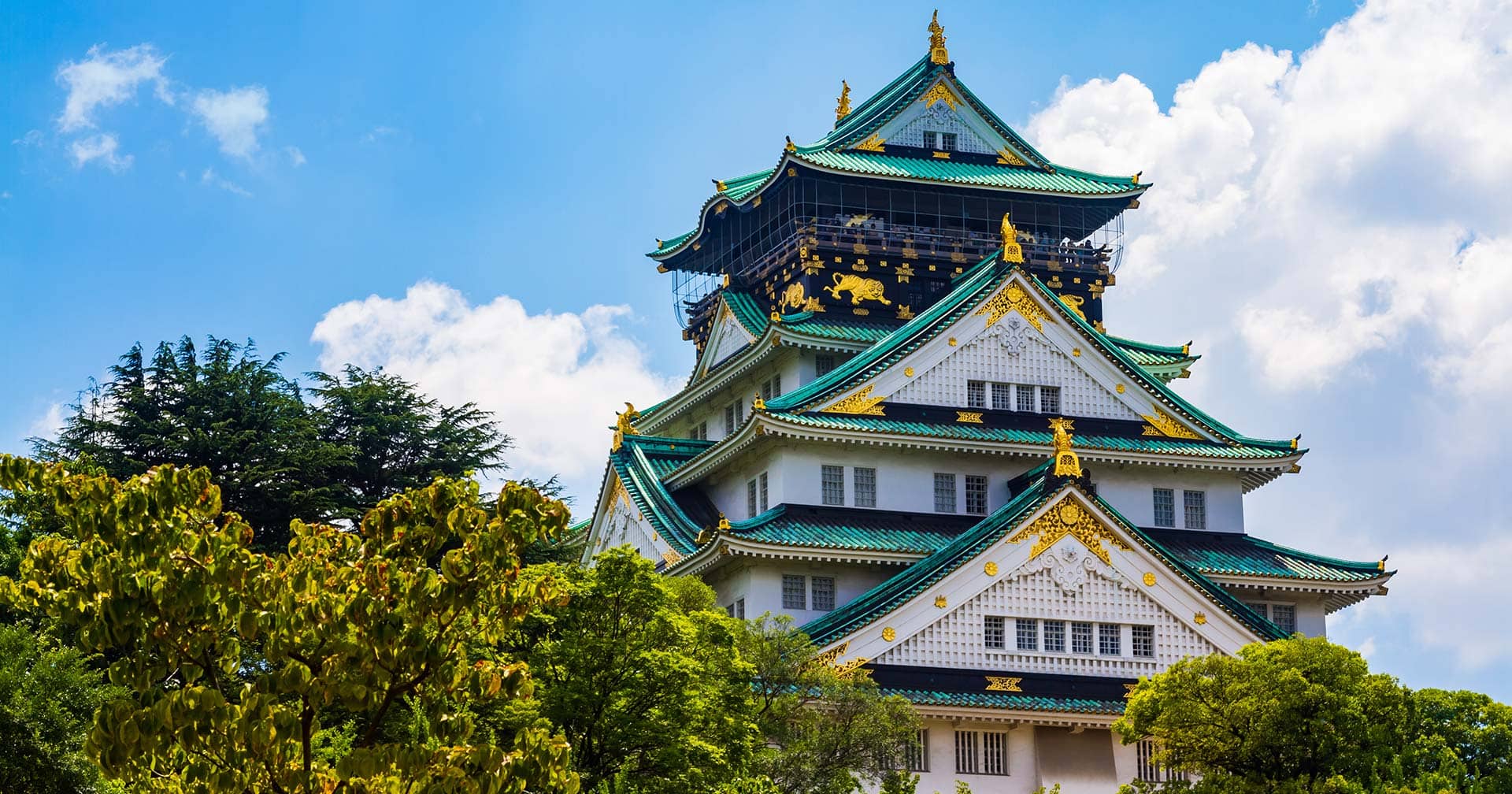
A drive through the modern of city takes you to historic Osaka Castle. Originally intended to be Japan's strongest and most beautiful castle, this monumental old fortification was built over a 3.5-year period by 30,000 to 40,000 daily laborers, and is enclosed by stone walls 7.5 miles in length. Over the centuries, the castle has been destroyed by wars and natural disasters, and then rebuilt to its original splendor. During your visit, you’ll marvel at Osaka Castle's five-story donjon; it towers 131 feet in height and offers wonderful expansive views and photo opportunities. Other structures, including a two-story tower built in 1620, also remain.
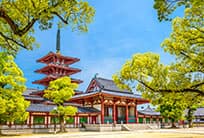
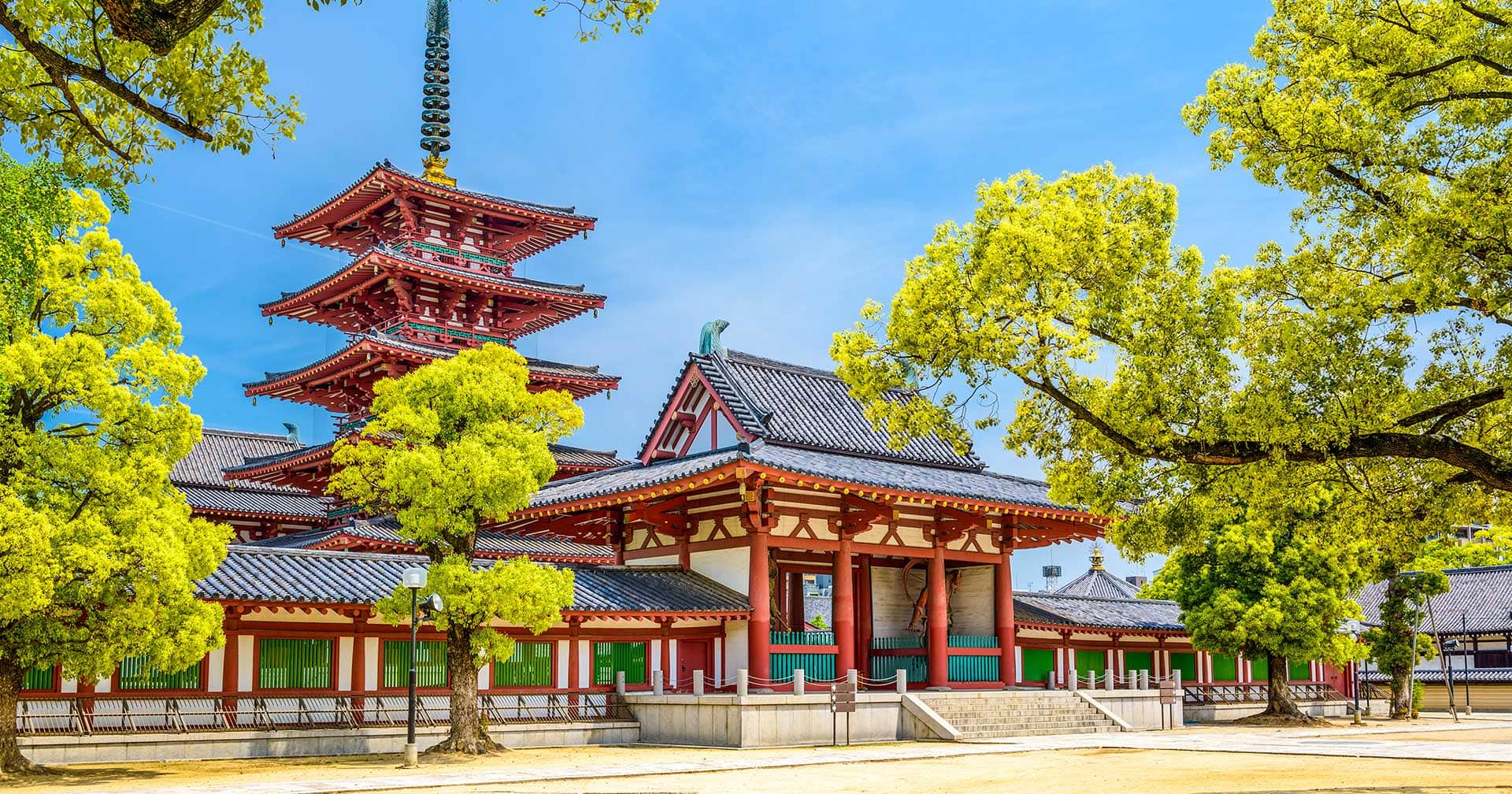
You’ll also visit Shitennoji Temple. Built in 593 AD, Shitennoji Temple is believed to be the oldest Buddhist temple in Japan. Explore the temple's great southern gate, or nandaimon, central gate, or chumon, the pagoda, main hall, or kondoh, and lecture hall, or kodo. All are constructed in the straight-line, Shitennoji Cathedral style.
Duration 7 hrs
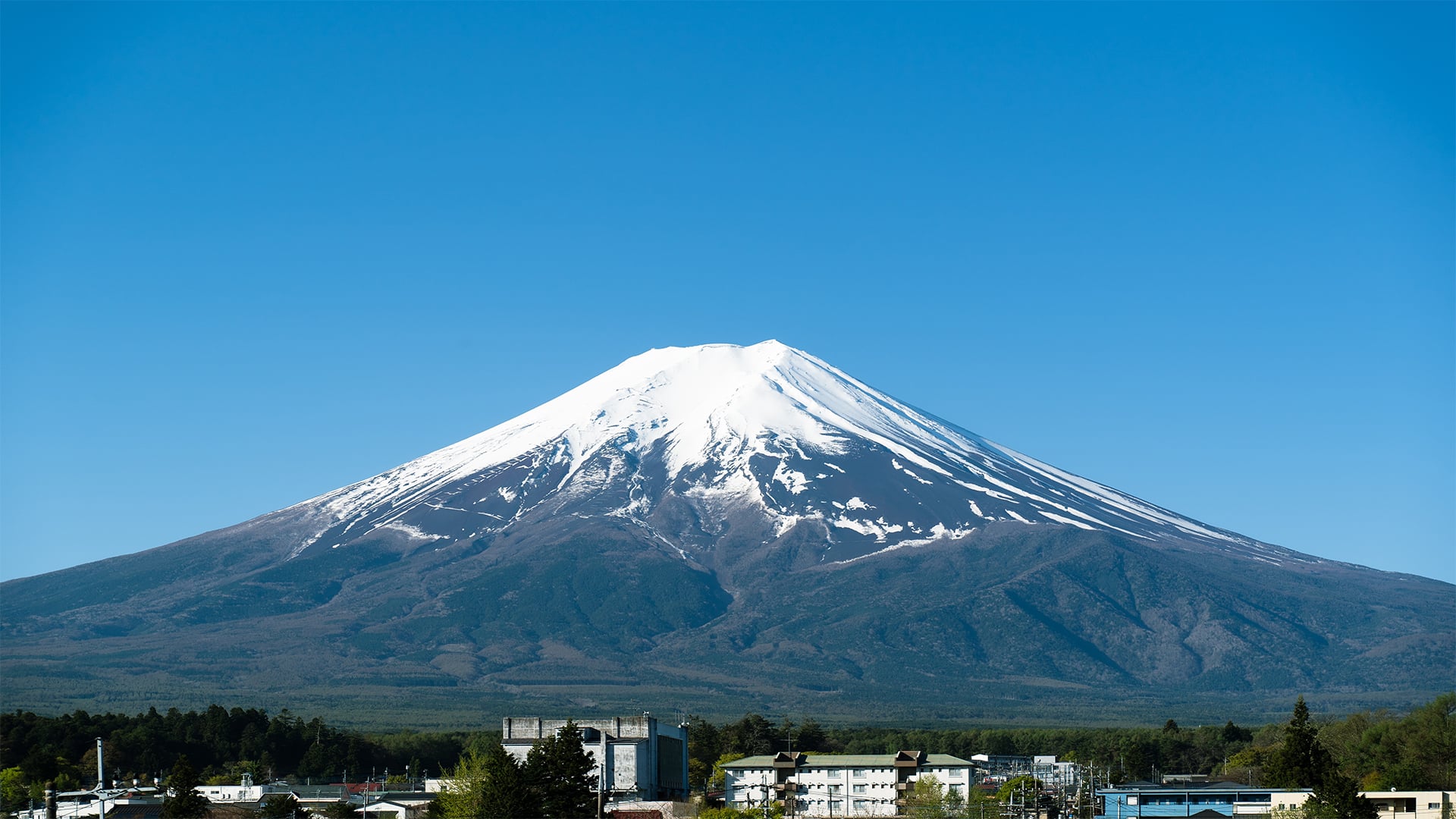
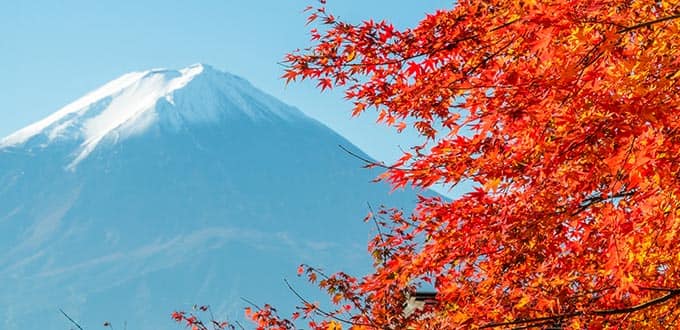
Visit a serene shrine and one of Japan’s most stunningly natural seaside settings, both lying in the shadow of majestic Mount Fuji, Japan’s highest mountain. Settle in for a drive into the beautiful countryside that lies in the foothills of Mount Fuji. Japan’s national symbol and one of its most extraordinary settings, Mount Fuji has been deemed a UNESCO World Heritage Site as a sacred place and source of artistic inspiration. Prior to ascending Mount Fuji, climbers often pray at Fujisan Hongu Sengen Taisha Shrine, which you’ll visit. The shrine has been considered a guardian deity that prevents natural disasters and ensures easy childbirth. More than 500 cherry trees grace the surrounding grounds. Inside, there is a pond fed by melting snow and ice from Mount Fuji. The pond has been designated a Special Natural Monument and attracts pilgrims that come to purify themselves in the clear water. Next stop is the Mt. Fuji's 2th Station, at approximately 4,700 feet. You will have chance to see dynamic view of Mt. Fuji. The 2th Station offers stellar views of the mountain's magnificence. Last stop is the Mt.Fuji World Heritage Centre, opened in December 2017 and consists of three buildings. The central building is covered with the wood lattice and characteristic shaped of the inverted cone. This wood lattice is made from Fuji cypress. From the top floor, you will enjoy magnificent view of Mt. Fuji as picturesque.
Duration 9 1/4 hrs
Discover the gracious spirit of Old Japan on this full-day tour to three of Kyoto's most alluring sites. The imperial capital of Japan for over a thousand years, Kyoto is the cultural and artistic heart of the nation, best known for its Buddhist temples, Shinto shrines, beautiful gardens and historically priceless buildings. Following a two-hour drive from Kobe, you arrive in the city of Kyoto, the old capital of Japan.
Visit Sanjusangendo Temple, famous for its 1,001 12th-century statues of the Buddhist deity Kannon, the Goddess of Mercy. Sanjusangendo translates to hall with 33 bays and the 33 alcoves display 1,000 awe-inspiring statues and a single gigantic sitting image of Kannon. Carved from Japanese cypress and painted with gold leaf, each of the multi-armed figures stands five and a half feet tall, and has subtle differences in expression and accoutrements, testimony to the skill and originality of the Momoyama wood carvers.
Enjoy lunch at a local restaurant and continue your exploration of this historic city. Drive to Nijo Castle, with its immense walls and moat. Completed in 1603, the castle is famous for its nightingale floors, designed to detect the footsteps of ninja assassins and warn the residents of invaders. Listed as a UNESCO World Heritage Site, Nijo Castle is one of the world's great historical buildings.
You’ll also visit the magnificent Kinkakuji (Golden Pavilion), Kyoto's world-renowned and most photographed temple and garden. Built in 1394, the original Kinkakuji was a retirement villa for a former Shogun. The three-story Chinese-influenced Golden Pavilion has delicately curving roofs, with the walls and eaves of the second and third stories covered in shimmering gold leaf.
Duration 8 1/2 hrs
Enjoy the unrivaled charm of Nara and Osaka, two of Japan's most historic cities, on this full-day tour.
It’s a scenic 90-minute drive to Nara, the oldest capital of Japan (710-784), and the cradle of Japanese arts, literature and crafts with temples and shrines that pre-date those found in Kyoto. Modeled after Changan, capital of Tang Dynasty China, the exquisite city of Nara is home to eight World Heritage Sites, and numerous art and architectural relics classified as National Treasures and Important Cultural Assets by the Japanese government.
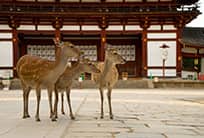
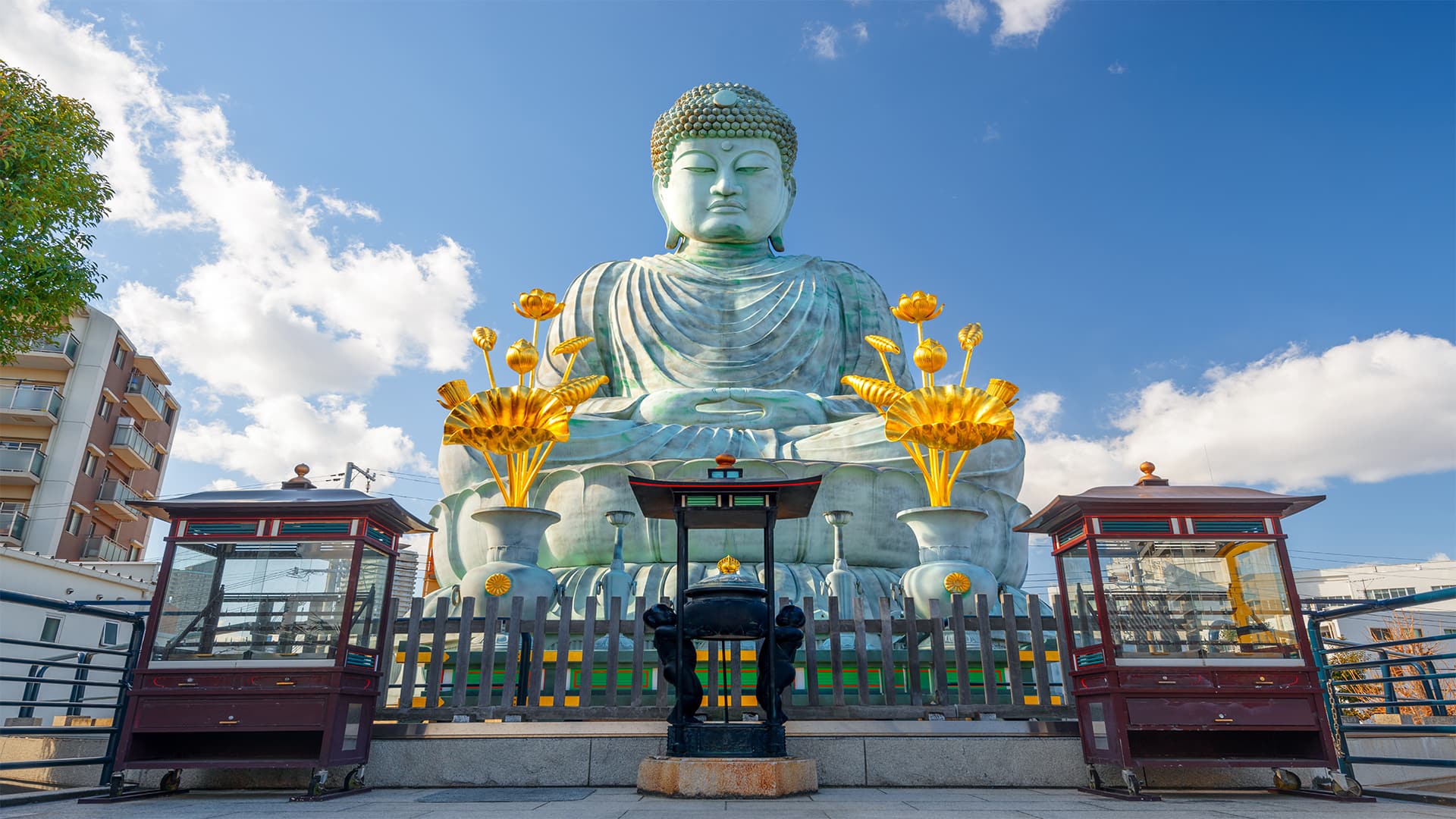
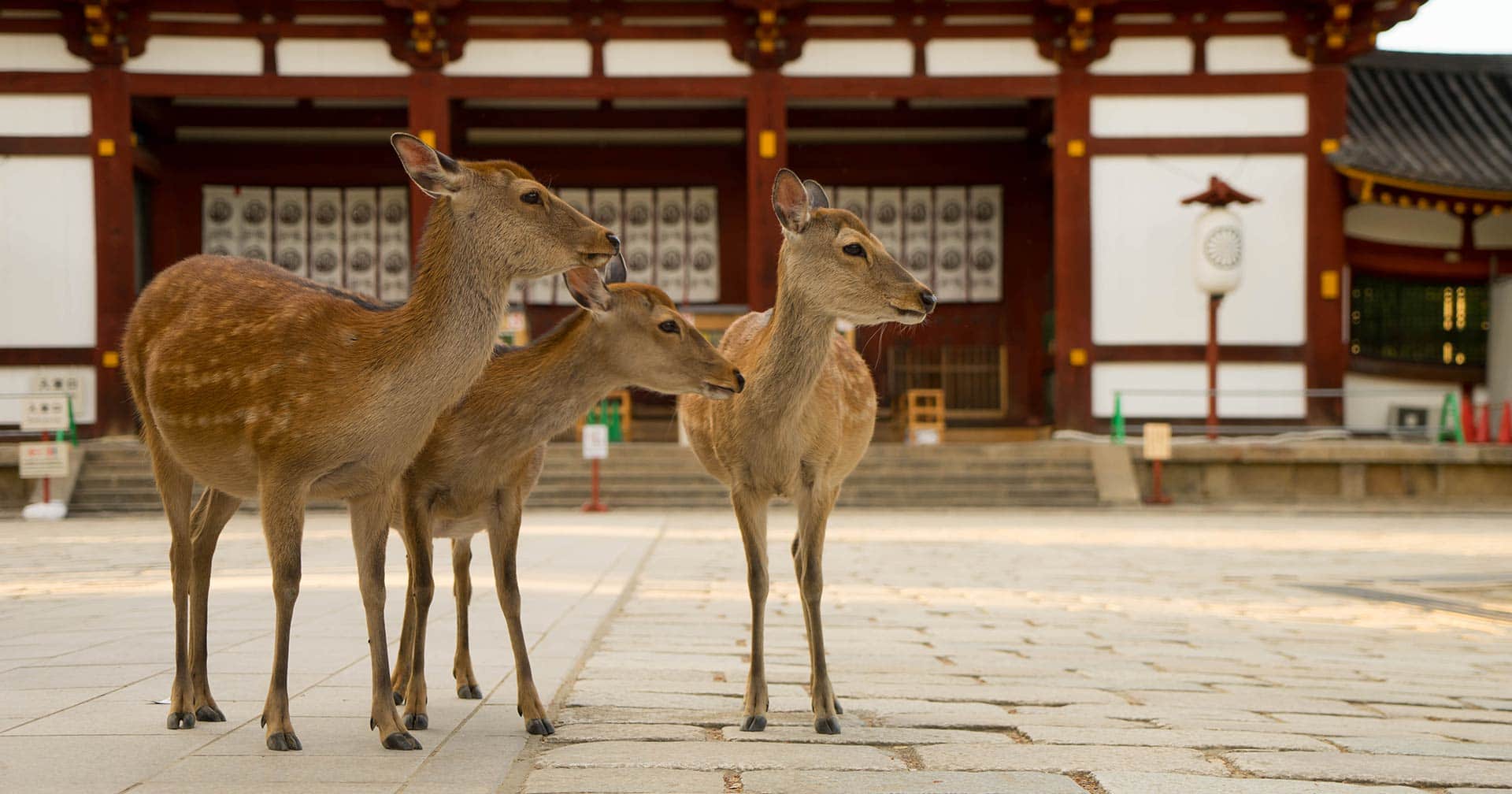
Visit the incredible Todaiji Temple, founded in 752, and best known for its Daibutsu, a colossal statue sitting 49 feet tall, making it the world's largest Buddha statue. The eighth century statue is housed in an all-wood building, the Daibutsu-den, considered the largest wooden building in the world. Stroll through Nara Park, commonly referred to as Deer Park. The tranquil park covers 1,295 acres of woodland and is home to over 1,000 free roaming deer. Considered messengers of the gods in the Shinto religion, Nara's deer are a symbol of the city and are designated a National Natural Monument. Also visit Kasuga Taisha Shrine.
Following lunch at a nearby restaurant, you'll drive to Osaka, with a stop to visit the imposing Osaka Castle. One of Japan's most famous castles, it has massive stone foundations, wing-tipped roofs with gilded decorations.
Duration 4 1/2 hrs
Osaka shines as one of Japan's most modern cities, yet it holds its past dear, as you'll see during your visit to Osaka Castle and free time in the Namba shopping district.
Enjoy the drive to the Osaka Castle, which was first built in 1583 and now serves as the symbol for the city. Although the original castle was destroyed over the years, many of the key features of the complex still remain, including turrets and sections of the walls that border the surrounding moat. The existing version of the castle itself was built in 1931 to replicate the original. The steep, stone walls at its base are particularly noteworthy, as they rise nearly 100 feet, an architectural rarity in Japan.
Next, you'll drive to Osaka's energetic Namba district, a hub for shopping, dining and entertainment. During your free here you'll discover a plethora of stores and boutiques selling every imaginable type of merchandise, from designer fashions to miniature Buddha statues; the dining choices are just as diverse.
Following your free time in Namba, you'll meet your guide at the designated point and time for the drive back to the pier. Guests who wish to remain in Namba to further explore on their own, should advise their guide and will be responsible for making their own way back to the pier at their own expense.
Duration 4 hrs
Sample a selection of sake made with water from Mount Fuji and then visit a heritage center dedicated to the mountain and its influence throughout Japan.
A scenic drive through the countryside will bring you to Fuji Takasago, a sake brewery founded in 1831 at the foot of Mount Fuji, where its groundwater is most abundant. The water from the snow melt that runs off the mountain takes nearly 100 years to filter through the earth’s underground layers, leaving the water extraordinarily pure.
Following an enlightening tour of the brewery, where you will watch rice being turned into sake, you will be offered a selection of Fuji Takasago’s rice wines. During the sampling, you may notice that the Mount Fuji water imparts a mild taste to the sake. Being high in amino acids, these sakes are also rich in umami, a flavor associated with rice wine.
You will gain a different perspective of Japan’s most celebrated peak at the Mount Fuji World Heritage Center nearby. Its exhibitions include Japanese art and literature that the mountain has inspired and paper screens that show Mount Fuji changing with the seasons. Another highlight is the building’s inverted lattice cone sculpture that mimics the shape of Mount Fuji when viewed in the reflecting pool.
The center was named to recognize UNESCO declaring Mount Fuji to be a World Heritage site for its solitary beauty, iconic shape and deep impact on Western art. It may well be the world’s most famous stratovolcano.
less
Duration 4 1/2 hrs
Delve into the world of tea through hands-on experiences that will reveal the cultural importance of the beverage in Japan. Your immersion will begin at a green tea plantation, where you will head into the fields with a wicker basket and pick tea leaves. You may be surprised by which ones are ready to harvest. During the workshop that follows, you will learn how to properly brew green tea, which is known as sencha. Factors that ensure a perfect cup of tea include water temperature, the proportion of leaves to water and not disturbing the tea while it is steeping. Visiting a factory where tea is processed will enhance your understanding even further as you will watch the workers perform each step. Later, during a traditional lunch – served with tea, of course – you might reflect on how tea is more than a beverage in Japan.
HIGHLIGHTS
• Enjoy hands-on experiences that involve picking, processing and brewing green tea leaves.
• Gain insight into the world of tea that is so ingrained into the Japanese culture.
• Relax at a restaurant while savoring a traditional Japanese lunch accompanied by green tea.
HELPFUL HINTS
• Dress in weather-appropriate clothing.
• Wear flat comfortable walking shoes.
Duration 7 hrs
OVERVIEW
Enjoy an authentic look at life in Kyoto, past and present, through a hands-on experience at a museum and by sitting in at a tea ceremony. The Samurai Ninja Museum offers a rare look into the Japanese warrior culture. The displays showcase authentic armor, swords and artifacts, many of which are centuries old. For a more interactive experience, you can try on the samurai armor and practice swordsmanship and throwing ninja stars. Participating in a tea ceremony will add another dimension to your understanding of Kyoto’s culture. As you will discover, the ceremony involves more than merely the beverage. It is also a ritualistic art form that has endured for centuries. For a candid glimpse at daily life in Kyoto, you will meander through the Nishiki Market, which has been operating downtown for more than 400 years. It is an excellent place for people-watching. During your free time there, you might dine on your own.
HIGHLIGHTS
• Browse a museum dedicated to Japan’s samurai and ninja warriors.
• Try on samurai armor and swing a samurai sword if you like.
• Participate in a tea ceremony in a historical purpose-built building.
• Enjoy free time in the 400-year-old Nishiki Market and stroll Kyoto’s main shopping area.
HELPFUL HINTS
• Dress in weather-appropriate clothing.
• Wear flat comfortable walking shoes.
Duration 5 1/4 hrs
OVERVIEW
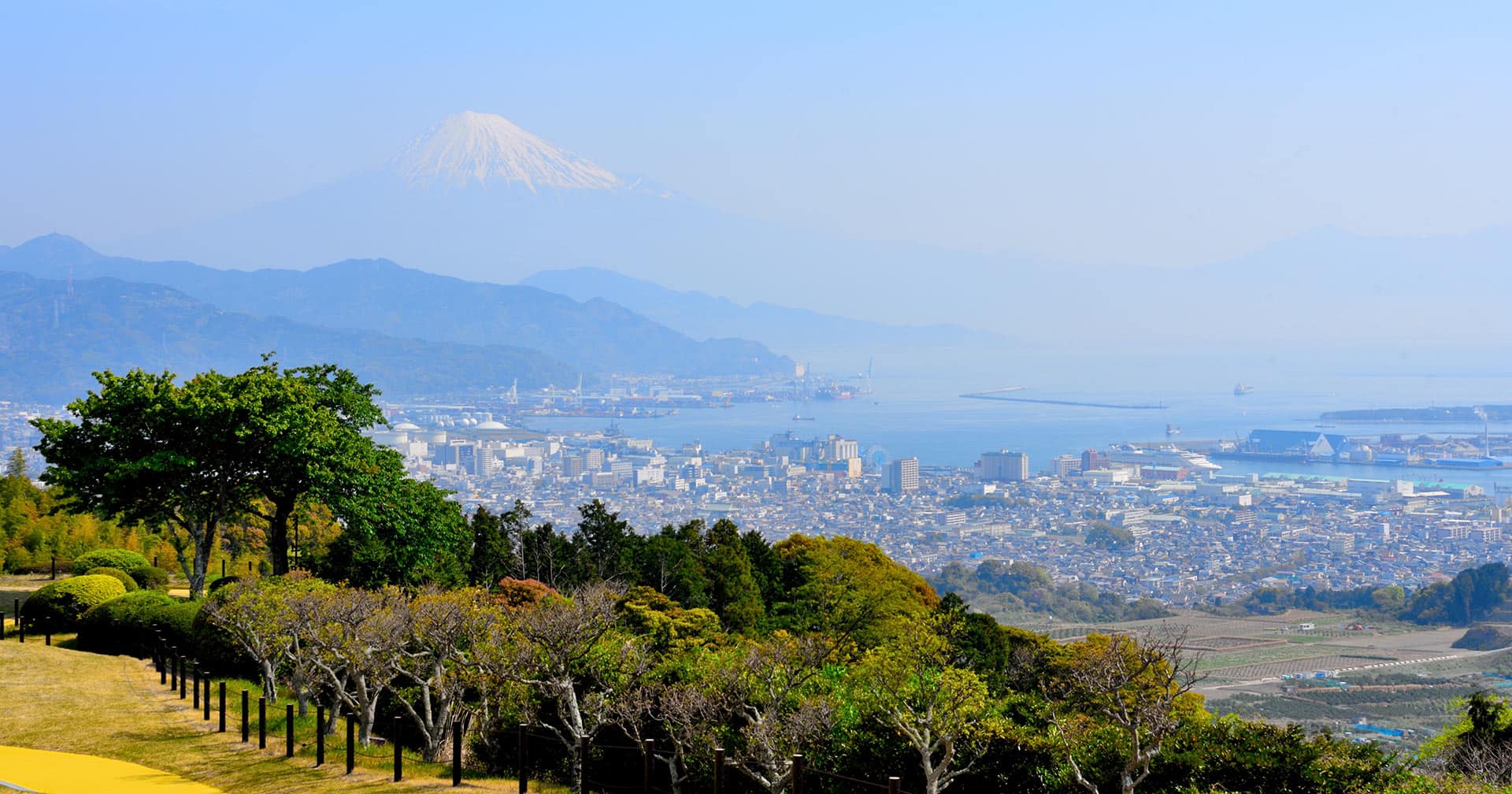
Marvel at glorious Suruga Bay while riding a ropeway to a hilltop Shintō shrine and then delve into the Japanese culture by making chopsticks. While some people climb the 1,000 or so steps leading to the Kunozan Toishogu shrine, you will ride ropeway. More wonders await you within the shrine complex, a collection of brightly painted ornate buildings dedicated to the shōgun that unified Japan in the early 17th century. Be sure to notice the well-armed guardian statue near the Romon gate. Stop at Nihondaira Park outlook, which offers a glorious view of Suruga Bay and majestic Mout Fuji. You will experience Japan’s creativity at Sumpu Takumi Shuku, a cultural workshop where artisans produce traditional crafts using centuries-old techniques. There you will have the opportunity to create your own pair of lacquered chopsticks by grinding and polishing.
HIGHLIGHTS
• Ride a ropeway to hilltop Shintō shrine while admiring the views of Suruga Bay.
• Browse the shrine, which is dedicated to a revered shōgun that brought peace to Japan.
• Create your own lacquered chopsticks at a workshop for traditional artisans.
HELPFUL HINTS
• Dress in weather-appropriate clothing.
• Wear flat comfortable walking shoes.
Duration 5 hrs
OVERVIEW
Watch a captivating kendo performance and learn some of the basics of this martial art before spending free time in the vibrant Shinsekai district. Accomplished masters will demonstrate kendo, which is derived from the sword-fighting techniques that the ancient samurai practiced. As you will see, the participants wear protective armor and use bamboo swords to strike each other. The points scored depend on the targets hit. Besides discovering the etiquette behind kendo, you are welcome to suit up in traditional kendo attire and try this martial art firsthand. For a complete change of pace, you will continue to Shinsekai, a nostalgic district modeled after both Paris and Coney Island. During free time there, you might dine on your own, play vintage arcade games and browse the seemingly endless shops, many of them along the Janjan-Yokocho alley. The landmark that rises above it all is the Tsutenkaku Tower, a symbol of Osaka.
HIGHLIGHTS
• See kendo masters demonstrate their sword-fighting abilities.
• Don a kendo training outfit and try your hand at this marital art.
• Explore the dining, shopping and entertainment district of Shinsekai on your own.
HELPFUL HINTS
• Dress in weather-appropriate clothing.
• Wear flat comfortable walking shoes.
Duration 4 1/4 hrs
Delve into Japanese culture by visiting an art museum, enjoying a ritualistic tea ceremony and admiring one of the most spectacular views of sacred Mount Fuji.
Visit the Tokaido Hiroshige Art Museum in the fishing village of Yui. More than a thousand woodblock prints from Utagawa Hiroshige, a 19th-century master of the ukiyo-e genre, are beautifully displayed here. As you will discover while browsing the works of art, the ukiyo-e genre typically depicts subjects of everyday life that include landscapes, birds and flowers.
Hiroshige’s genius for landscape composition and color in works such as The Fifty-Three Stations of the Tokaido influenced European painters such as Claude Monet and Vincent Van Gogh.
At a tearoom in a nearby park, you’ll enjoy a tea ceremony. You will be served traditional green tea, but the ceremony involves more than merely the beverage. It is a ritualistic art form in which the tea must be prepared and presented in a certain manner known as the Way of Tea.
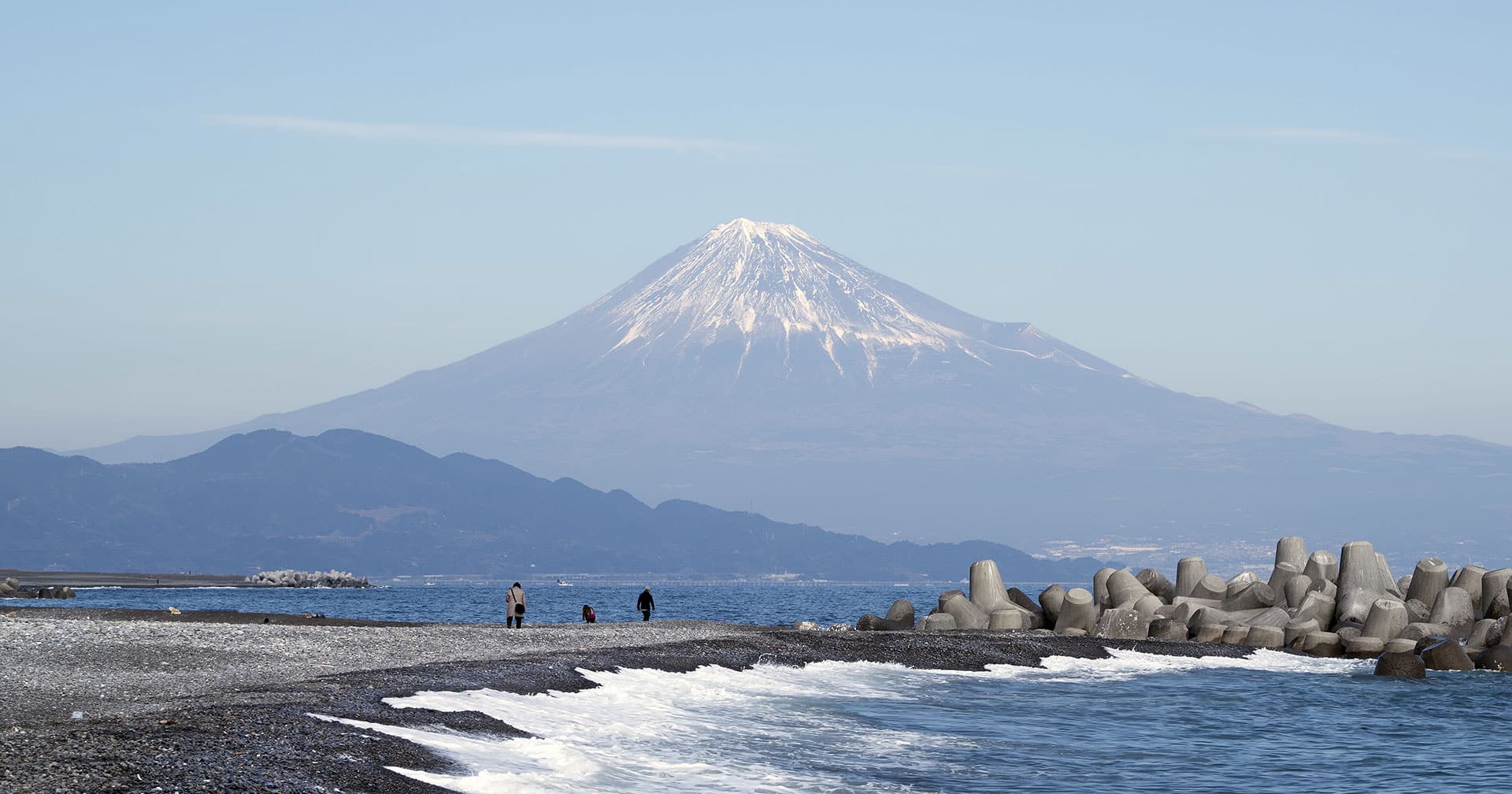
Drive to the seaside pine grove Miho no Matsubara. The grove consists of more than 50,000 pine trees, including a 650-year-old tree thought to have mythical powers. The view from the shore with Mount Fuji lording over the scenery has been rated one of the top three views in Japan.
*Prices vary by ship and sail date. See Terms & Conditions
NCL makes arrangements for Guests for shore excursions solely for the convenience of the Guest; NCL does not act on behalf of or supervise the parties or persons who own, furnish, or operate such excursions, and the same are provided by independent contractors. NCL assumes no responsibility for, nor guarantees the performance of, any such excursion provider, and Guests acknowledge that NCL shall not be liable for losses or injuries arising from the acts or omissions of such provider.
Participation in activities and excursions may involve physical exertion, and may be potentially hazardous or dangerous. It is the responsibility of each individual to determine whether you are capable of engaging in any activity. Participation in any activity or excursion is at your own risk.
Photographs are for illustration purposes only used to represent the excursion experience and may not accurately depict the excursion, location, or activity indicated.