Added to Favourites!
Saigon Highlights
Ho Chi Minh City (Phu My), Vietnam
Duration 9 hrs
- Adult from: C120.88 CAD
- Child from: C93.71 CAD

| From | Message | Reservation # | Date | |
|---|---|---|---|---|
| Norwegian Communications Centre | Norwegian Communications Centre Don’t Lose Your Reservation! | 25422881 | Apr 1, 2014 | |
| Norwegian Communications Centre | Norwegian Communications Centre Reserve your dining now | 25422881 | Apr 1, 2014 | |
| Norwegian Communications Centre | Norwegian Communications Centre Don’t Lose Your Reservation! | 25422881 | Apr 1, 2014 | |
| Norwegian Communications Centre | Norwegian Communications Centre Don’t Lose Your Reservation! | 25422881 | Apr 1, 2014 |
*Terms & Conditions
Package not available on sailings less than 5 days or charter sailings.
Duration 9 hrs
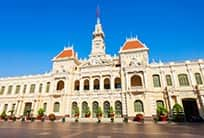
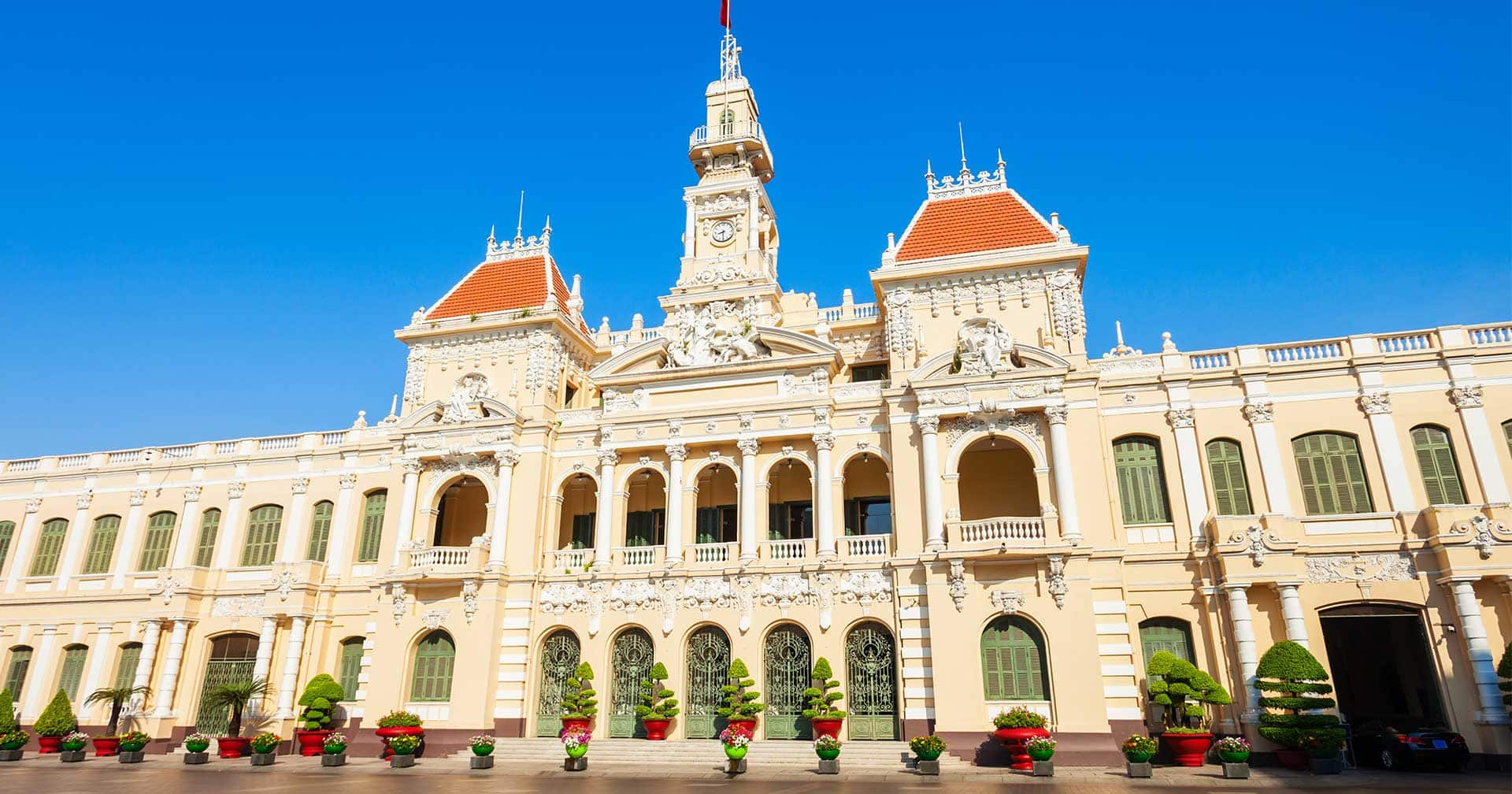
Gain an overall understanding of Saigon through landmark architecture that reflects the changing face of the metropolis known as Ho Chi Minh City since 1976. In the lively district of Cholon, you will browse the bustling Binh Tay Market and a Buddhist temple dedicated to the Chinese sea goddess Mazu. For a more contemporary perspective, you will view Independence Palace, also known as the Reunification Palace, a modernistic white building that was home to the president of South Vietnam during the Vietnam War. The Notre-Dame Cathedral Basilica of Saigon presents a glimpse into colonial life, as the French constructed it in the mid-1800s. The ornate Central Post Office is another French-built colonial gem. If not for the large portrait of Ho Chi Minh inside, you might think you were in Paris. Saigon is also known for its artisans, especially those that make lacquerware, a traditional skill that you will observe in a workshop.
less
Duration 7 1/2 hrs
OVERVIEW
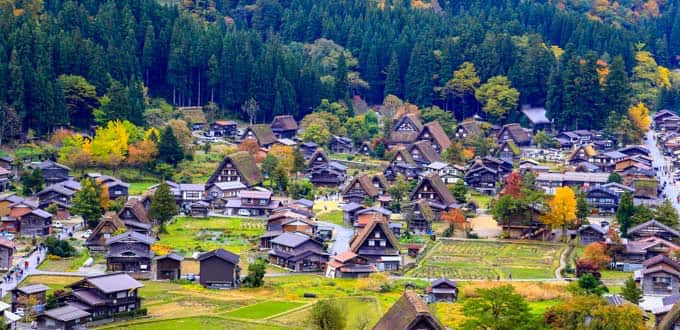
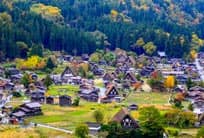
Behold the architecture in two isolated villages that UNESCO found so unusual that it deemed them World Heritage sites. The villages of Shirakawago and Gokayama are in the remote Shogawa River Valley surrounded by high rugged mountains, a location that made them difficult to access for centuries. To cope with the abundance of snow that falls there, the residents constructed farmhouses with steeply pitched thatched roofs to reduce the amount of snow that accumulates on them. The roof design also allows for large attics, in which the residents rear silkworms, which they feed leaves from the surrounding mulberry trees. Only one other nearby village boasts this type of architecture known as gassho-zukuri, a style that means “constructed like hands in prayer.” Following free time in both villages, you will watch a demonstration of paper-making in Gokayama. The specialized washi paper is exceptionally colorful and patterned. The fiber for it comes from mulberry trees.
HIGHLIGHTS
• Visit two villages that UNESCO declared World Heritage sites for their architecture.
• Gain an understanding of why the buildings have such steep roofs.
• Explore the areas of most interest to you during free time in both villages.
• See how durable washi paper used for arts, crafts and writing is made from mulberry bark.
HELPFUL HINTS
• Dress in weather-appropriate clothing.
• Wear flat comfortable walking shoes.
Duration 3 3/4 hrs
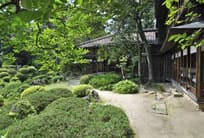
Delve into the artistic and cultural sides of Sakata by visiting three museums, each with its own special emphasis. One of the first privately owned art museums Japan, the Honma changes its exhibits every few months, but the real draws are the garden and early 19th-century villa of the prominent Honma family, where the museum was originally housed. Both are wonderfully serene. Almost the entire focus of the Domon Ken Museum is the photography of its namesake, a prolific Sakata-born photojournalist revered for the way he documented the rise of postwar Japan. Don’t miss the outdoor sculptures by Isamu Noguchi, a creative genius that also worked in media ranging from lighting to furniture. The Shonai Rice Museum is more cultural, as it is housed in several 19th-century warehouses. It collection includes farm tools and exhibits detailing the history of rice cultivation. The zelkova trees surrounding the museum have become a symbol of Sakata.
Duration 4 hrs
Visit two of Beppu’s many hot springs known as jigokus and a forested park that countless wild monkeys inhabit. With more than 2,500 thermal springs in and around Beppu, thick clouds of steam can always be seen rising from the ground. At the Umi Jigoku, the so called Sea Hell, you will notice that the cobalt-blue water is near boiling and so hot that visitors only observe the thermal phenomenon. However, at the Chinoike Jigoku or Blood Pond Hell, you might take a foot bath in the iron oxide-rich water that gives the pool its reddish color. The hot springs throughout Beppu are said to have restorative powers, and visitors come from all over to soak in them. The Takasakiyama Monkey Park is also wildly popular, as it offers a rare close-up look at macaques freely roaming the forested mountain slopes. You too will be free to wander about while observing these Old World monkeys.
Duration 4 hrs
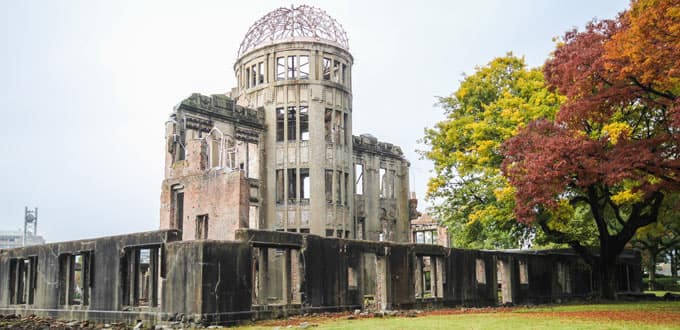
View the landmarks of Hiroshima, some commemorating the atomic bomb blast here in 1945 and others reflecting the city’s celebration of peace. At the poignant Hiroshima Peace Memorial Park, you will behold the ruins of some of the few concrete buildings left after the atomic bomb was dropped. One of them, the Atomic Bomb Dome, has been declared a UNESCO World Heritage site and has become a symbol of Hiroshima. You will also browse the Peace Memorial Museum whose exhibits show Hiroshima before and after the bombing and personal artifacts from the victims that humanize the devastating event. The museum encourages visitors to make a vow for universal peace. While the mood there is somber, serenity is the overarching theme at Shukkei-en Garden. Besides being a wonderful respite from the hubbub of the city, the garden is a visual delight, as plants are always in bloom. Although the atomic bomb destroyed the garden, it has been fully restored.
Duration 4 hrs
Visit Nagoya’s iconic namesake castle and an ornate temple dedicated to Kannon, the goddess of mercy. Ieyasu Tokugawa, the first shogun of the Edo Period, ordered the castle’s construction in 1612 to secure the strategically important Tokaido Road. One of the largest castles in Japan, most of its buildings were destroyed during World War II. It was later meticulously reconstructed to resemble the original building, and as you will see it is magnificent. Tokugawa was also instrumental in the placement of Osu Kannon Temple, as he had it moved to its present location in the early 17th century.
As beautiful as the building is, the temple is more well known for its library of 15,000 Japanese and Chinese texts, the most valuable being the oldest handwritten copy of Japan’s early history. You will also have the chance to shop in a nearby arcade, where you will find merchandise ranging from exquisite kimonos to the latest electronics.
Duration 4 1/2 hrs
An eye-opening study in contrasts, this tour presents the extravagant world of Brunei's sultan, followed by a look at life in a village built on stilts in the river. Starting off from the pier, you will first travel inland toward the majestic Jame Mosque, Brunei's largest, and the Prime Minister Office where you will pause briefly for photos. Continuing on, you will arrive at the white-domed Royal Regalia where you can wander through exhibits of luxurious items from the Sultan's lavish coronation and other celebrations. Some of the items you may have the opportunity to see here are His Majesty's royal chariot, ceremonial swords, a model of the palace and various gifts from foreign dignitaries. But as you will soon see, there's more to Brunei than the extravagances afforded by its abundant oil and natural gas. Making your way to a nearby jetty, you will board a boat and cruise to Water Village where you will witness firsthand a much different side of life. More than 30,000 people live here in thousands of structures built on stilts in the Brunei River. The village is an amazing assortment of homes, restaurants, mosques, shops and hospitals, all connected by wooden boardwalks. Surprisingly, some of the homes are quite elaborate, and you will have the unique opportunity of stopping by one for a cup of tea. Amazingly, people have lived in the Water Village for more than 1,300 years, making it one of the most historic areas in Brunei. Following your time at the Water Village, you will retrace your route as you make your way back to the pier.
Duration 8 1/2 hrs
Discover the gracious spirit of Old Japan on this full-day tour to three of Kyoto's most alluring sites. The imperial capital of Japan for over a thousand years, Kyoto is the cultural and artistic heart of the nation, best known for its Buddhist temples, Shinto shrines, beautiful gardens and historically priceless buildings.
Following an approximately 90-minute scenic drive to Kyoto, you arrive at the magnificent Kinkakuji (Golden Pavilion), Kyoto's world-renowned and most photographed temple and garden. Built in 1394, the original Kinkakuji was a retirement villa for a former Shogun. The three-story Chinese-influenced Golden Pavilion has delicately curving roofs, with the walls and eaves of the second and third stories covered in shimmering gold leaf.
After lunch at a local restaurant, you'll visit Nijo Castle, with its immense walls and moat. Completed in 1603, the castle is famous for its nightingale floors, designed to detect the footsteps of ninja assassins and warn the residents of invaders. Listed as a UNESCO World Heritage Site, Nijo Castle is one of the world's great historical buildings.
Another stop in your tour is Sanjusangendo, famous for its 1,001 12th-century statues of the Buddhist deity Kannon, the Goddess of Mercy. Sanjusangendo translates to hall with 33 bays and the 33 alcoves display 1,000 awe-inspiring statues and a single gigantic sitting image of Kannon. Carved from Japanese cypress and painted with gold leaf, each of the multi-armed figures stands five and a half feet tall, and has subtle differences in expression and accoutrements, testimony to the skill and originality of the Momoyama wood carvers.
Duration 4 3/4 hrs
Discover Tokyo and two of its traditional sights that coexist in stark contrast with tall futuristic skyscrapers and bustling city streets.
A 1-hour drive takes you to the center of Tokyo, a modern city where the 21st century coexists with the spirit of ancient Japan. Along the way, you’ll see many of the city’s landmarks.
Enjoy a visit to Hama Rikyu Garden, an Edo Period Japanese garden surrounded by the Shiodome district’s futuristic skyscrapers; a great example of how Japan is the land of contrasts. The garden was originally built as a feudal lord's Tokyo residence and duck hunting grounds during the Edo Period, but later served as a strolling garden and as an imperial detached palace before eventually being opened to the public in its current form. Hama Rikyu Gardens offer something beautiful at any season, as you’ll find golden foliage during the fall, plum blossoms in late winter and cherry blossoms in spring.
A scenic drive through the city takes you to the Imperial Palace, surrounded by moats and massive stone walls, also in the center of Tokyo. The palace is built on the former site of Edo Castle. It is the residence of Japan’s Imperial Family and is surrounded by a large park area. Although the Palace is not open to the public, from Kokyo Gaien, the large plaza in front of the Imperial Palace, you can view the Nijubashi, two bridges that form an entrance to the inner palace grounds. The stone bridge in front is nicknamed the Eyeglass Bridge for its looks and is one of the most recognized bridges in Japan. You’ll have some free time in the square to explore a bit and take some memorable pictures.
After enjoying the sites in Tokyo, your coach will bring you to Narita International Airport for your flight back home.
Duration 4 hrs
OVERVIEW
Delight your senses with a meandering walk through an enormous flower park and then by sampling confectionery at a store designed to replicate an early 17th-century castle. As you walk the winding paths of Tottori Flower Park, you may enter the futuristic-looking Flower Dome, an enormous transparent hemisphere that maintains temperatures ideal for tropical plants. The other gardens are also arranged by themes such as herbal and water plants, lilies and formal European-style arrangements. Flower Hill is particularly noteworthy as its slope is blanketed in brilliant flowers that draw the eye towards Mt. Daisen. A different view of the mountain will be presented from the observation deck atop Kotobuki Castle, your next stop. The castle was designed as a replica of one that once stood nearby, but with a huge difference – Kotobuki wasn’t built for defense but rather to house a confectionary shop. While browsing, feel free to sample the candies and other delights.
HIGHLIGHTS
• Meander through Tottori Flower Park, where something is always in bloom.
• Easily find your favorite types of plants as they are arranged by themes.
• See Mt. Daisen from the Tottori Flower Park and from atop nearby Kotobuki Castle.
• Be amused that Kotobuki looks like a castle but is really a shop for sweets.
HELPFUL HINTS
• Dress in weather-appropriate clothing.
• Wear flat comfortable walking shoes.
Duration 10 hrs
Experience the beauty of one of Bangkok's lesser-known treasures during this full-day visit to the UNESCO World Heritage Site of Ayutthaya.
Depart the pier for the 3-hour drive to historic Ayutthaya. Ayutthaya was founded in 1350 AD, and remained the kingdom's capital for 417 years until 1767 AD, when it was conquered and destroyed by the Burmese. Visit the exquisite Bang Pa-In Summer Palace, formerly a popular summer retreat for Thai kings. The Palace includes one of the most photographed buildings in the kingdom, a charming Thai pavilion built over a pond.
Drive to the historic center of Ayutthaya and visit the Historical Park to explore some of Ayutthaya's most famous and interesting ruins. A part of the park was declared a UNESCO World Heritage Site. During the day, you’ll enjoy lunch at a local hotel.
Duration 4 1/2 hrs
The dynamic city of Hong Kong is boisterous, bustling, modern, exciting, vibrant, mysterious, entertaining, tempting and above all, enigmatic. This tour introduces you to the secrets of Hong Kong, where ancient traditions flourish side-by-side with an ultramodern city.
Drive to Hong Kong Island where you’ll take the Peak Tram for an exciting ascent to the top. Enjoy magnificent views of the city and harbor from this vantage point.
Your scenic drive heads towards the south end of Hong Kong Island. Pause for photos at, Repulse Bay, one of Hong Kong’s most beautiful and popular beaches. Visit the renowned floating village of Aberdeen for a memorable experience. Even though commercial towers and factories have engulfed this district in recent years, Aberdeen still maintains the characteristics of a traditional fishing village. Here, you’ll take the sampan - a wooden small boat, to zigzag along the small alleys of the village to have a close-look of the boat community.
Stop to visit HK's largest jewelry factory, where artists are at work to create some of the best winning designs using precious & semi-precious stones. Pass chic Wan Chai and the impressive financial district before returning to Kowloon and the ship.
*Prices vary by ship and sail date. See Terms & Conditions
NCL makes arrangements for Guests for shore excursions solely for the convenience of the Guest; NCL does not act on behalf of or supervise the parties or persons who own, furnish, or operate such excursions, and the same are provided by independent contractors. NCL assumes no responsibility for, nor guarantees the performance of, any such excursion provider, and Guests acknowledge that NCL shall not be liable for losses or injuries arising from the acts or omissions of such provider.
Participation in activities and excursions may involve physical exertion, and may be potentially hazardous or dangerous. It is the responsibility of each individual to determine whether you are capable of engaging in any activity. Participation in any activity or excursion is at your own risk.
Photographs are for illustration purposes only used to represent the excursion experience and may not accurately depict the excursion, location, or activity indicated.
Our group shore excursions are offered in English. Depending on the booking situation, various excursions are also offered in German, Spanish, French, Italian or Russian (minimum number of 30 participants). The tours offered may vary from cruise to cruise. Please see the detailed information for your shore excursion on board.